San Jose del Cabo is the other town at the end of the cape, about twenty miles up the Cortez side from Cabo San Lucas. It is older, quieter and built around a plaza rather than a marina. For anglers it matters for one reason above all others. The Gordo Banks sit offshore of it.
People treat Los Cabos as one place. It is really two towns about twenty miles apart with a strip of resorts between them. Cabo San Lucas is the loud end, built around the harbor. San Jose del Cabo is the older end, laid out around a colonial plaza and a church, with a grid of low streets, an art district and a slower pace. The international airport is on the San Jose side, so most visitors land at this end of the cape first even if they never see the town itself.
If you are staying in San Jose and fishing with us out of Cabo San Lucas marina, the transfer is a straightforward drive down the corridor, generally half an hour or so outside of rush hour. To confirm for whether we arrange that transfer and what it costs.
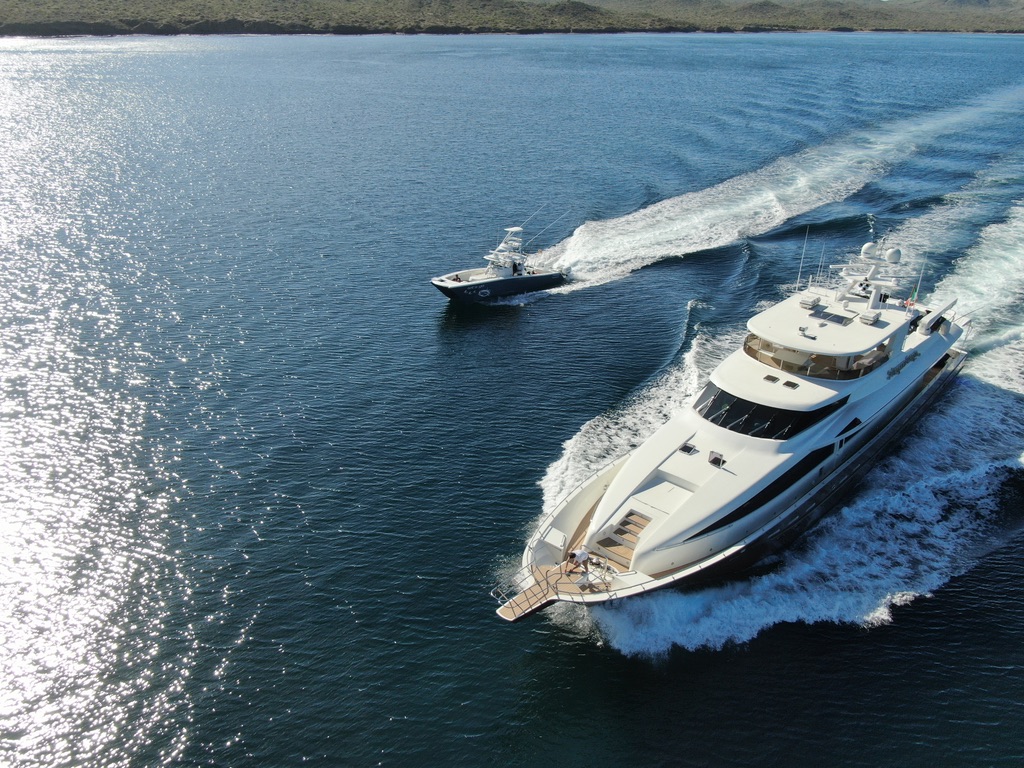
San Jose has its own marina at Puerto Los Cabos, on the north side of town near the estuary mouth. It is a working sportfishing harbor with its own fleet, and it is meaningfully closer to the Gordo Banks than Cabo San Lucas is. That is a real advantage on days when the target is tuna. To confirm for whether we operate departures from that side.
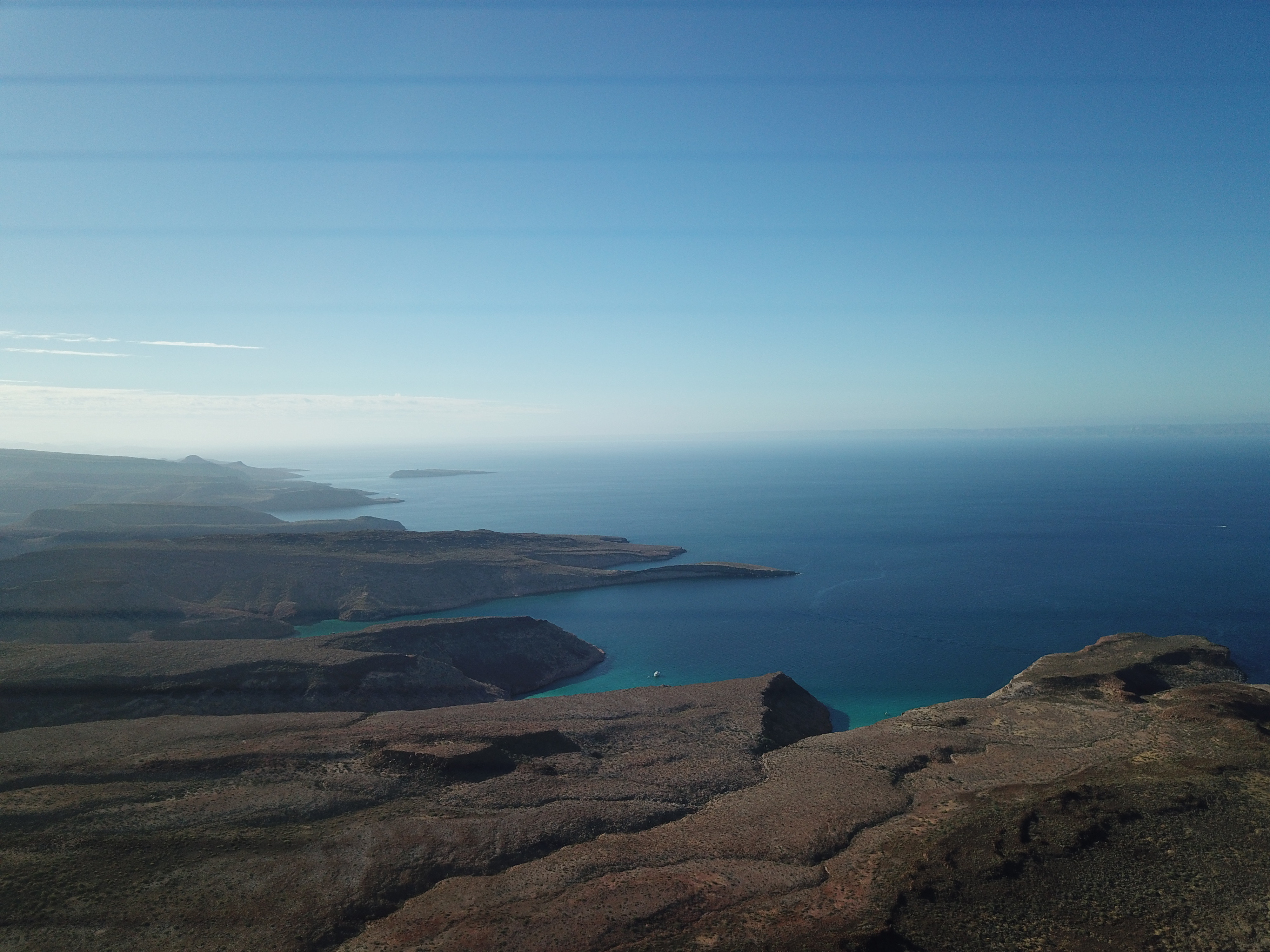
The Cortez side here is a different animal from the Pacific side of the cape. It is generally calmer, generally warmer, and the structure sits closer in. Working from town outward, you have sand beaches and inshore rock at Palmilla and Chileno, then the drop into blue water, then the Gordo Banks offshore to the southeast.
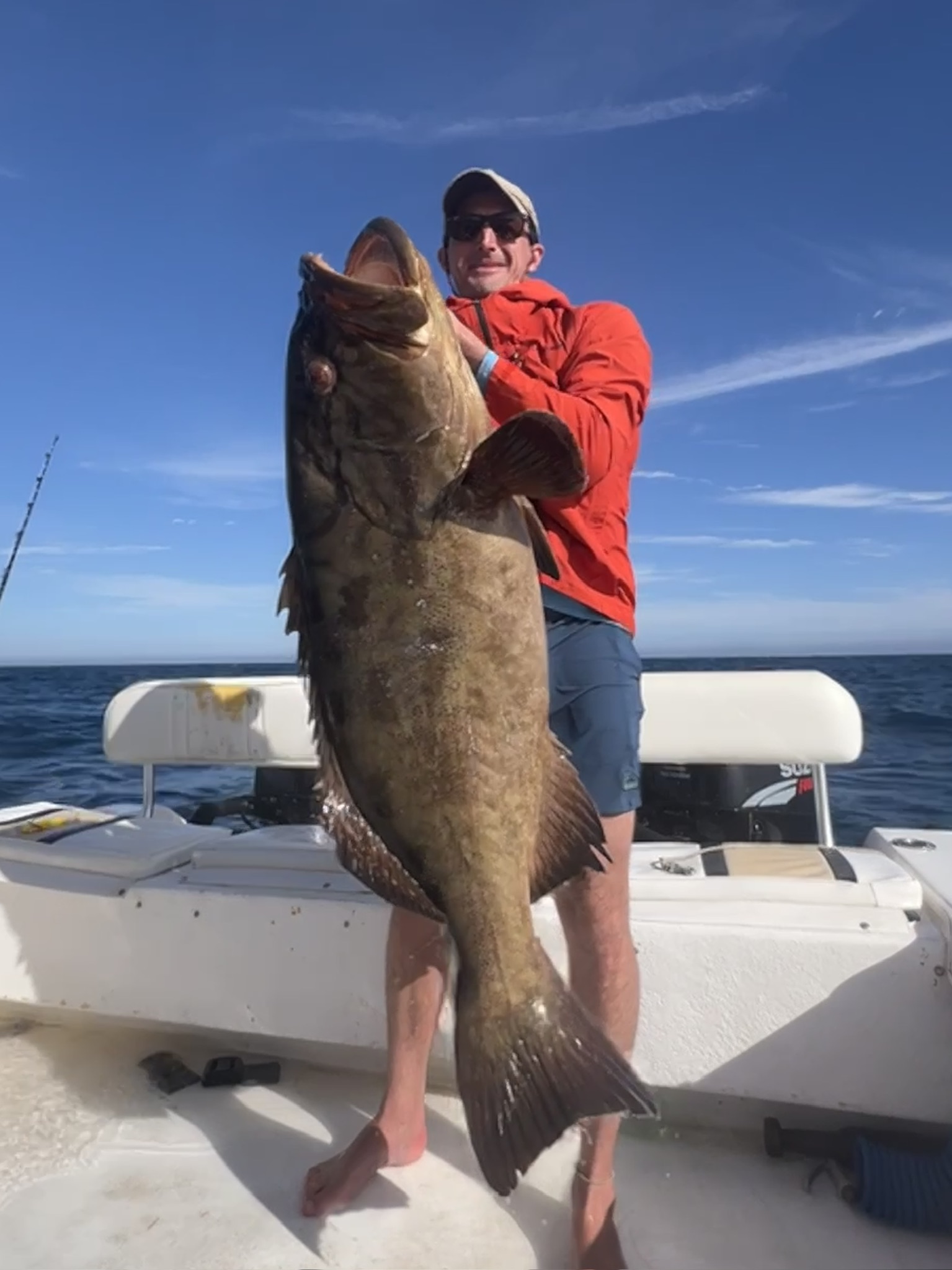
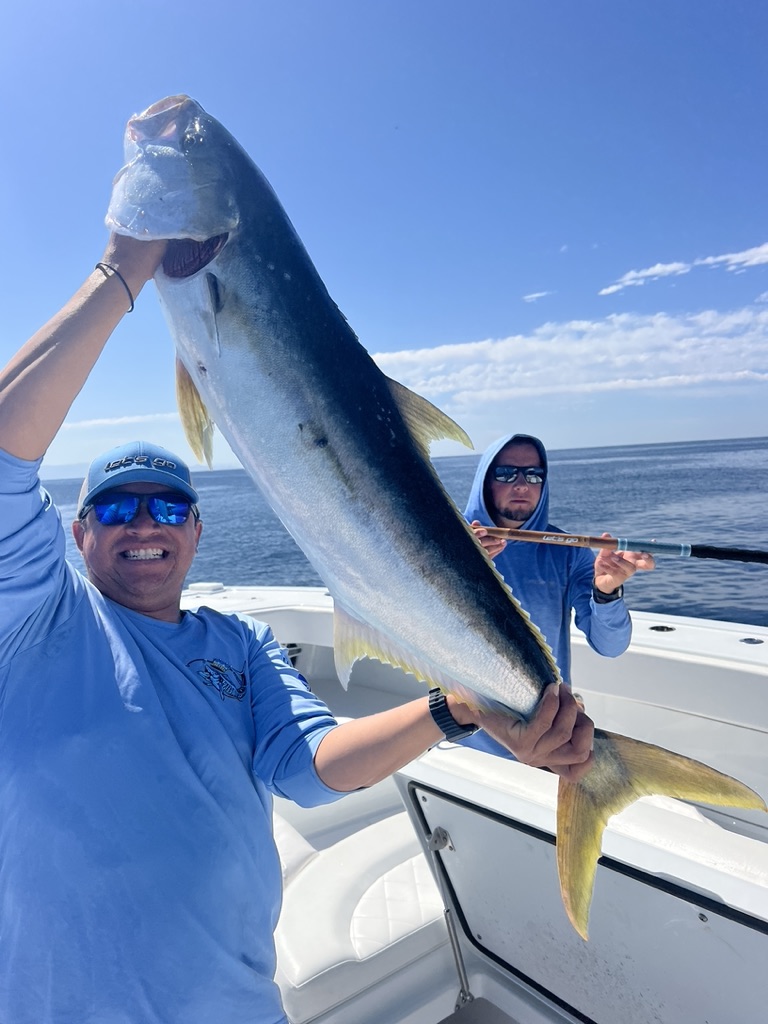
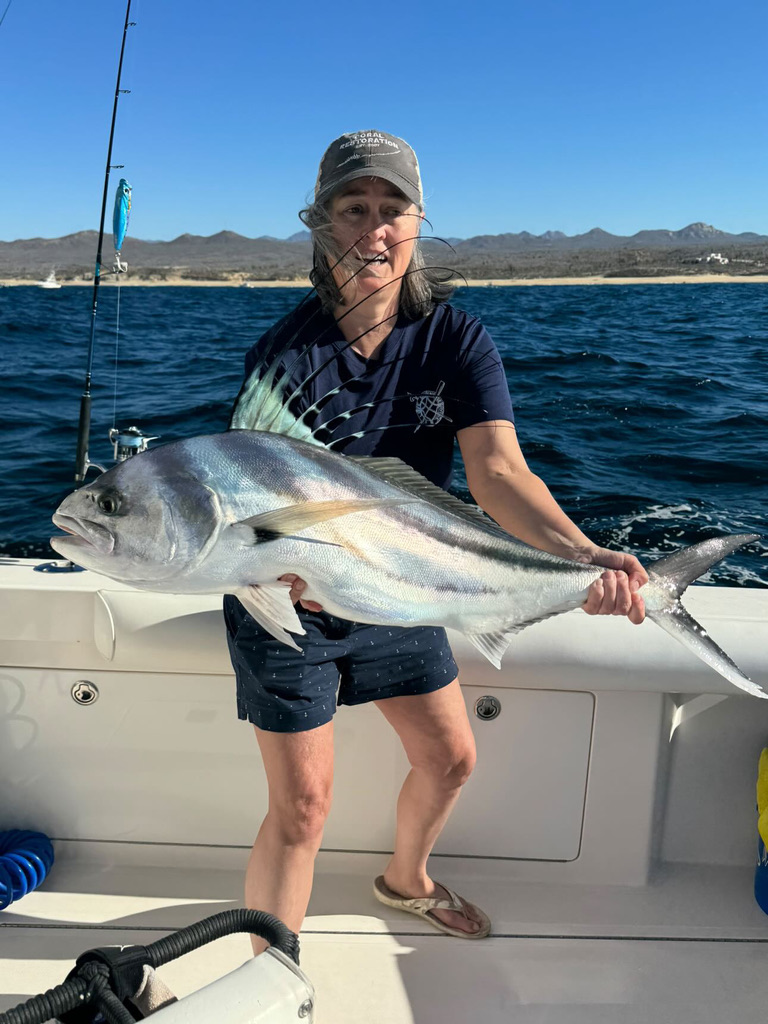
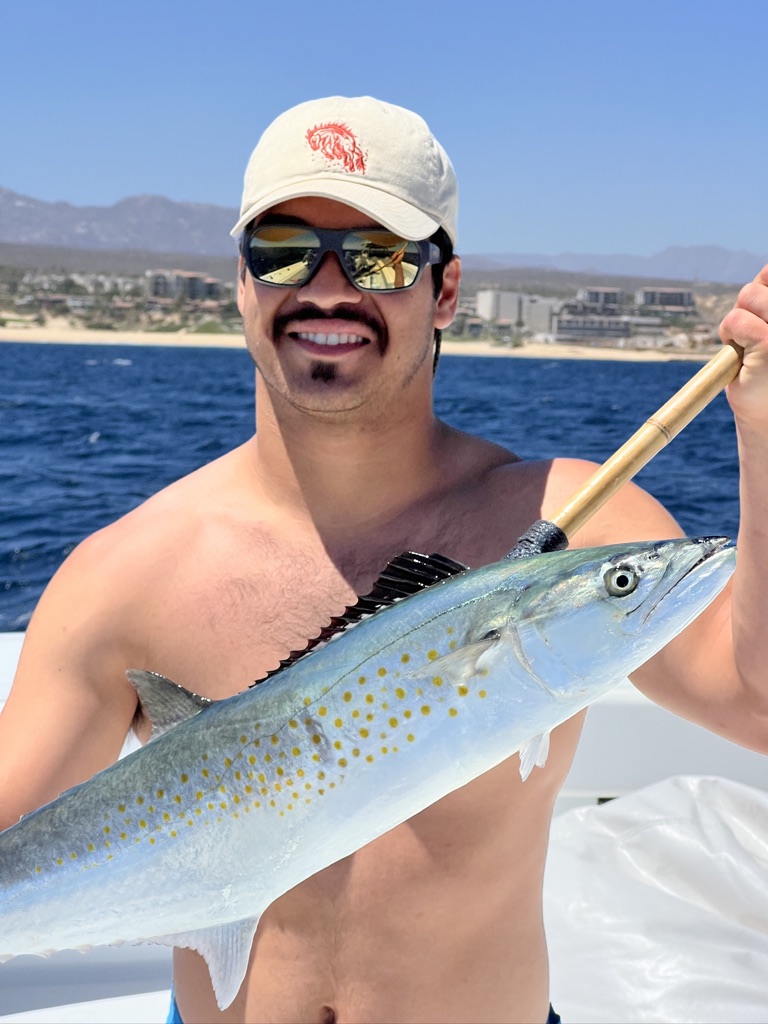
Inshore this is roosterfish, jack crevalle, sierra in the cooler months and a mix of smaller pelagics. Move out and you are into dorado, tuna and billfish depending on the season and the water temperature. The transition can be abrupt. It is normal to run twenty minutes and go from green inshore water to blue.
The Estero San Jose sits at the north end of the beach where a freshwater lagoon meets the sea. It is a protected area and a serious bird site, with herons, egrets and a lot of migratory traffic depending on the season. You do not fish it. It is worth an early morning walk if you have one spare, and it is a reminder that this coast is not only a sportfishing backdrop.
The open beach along the San Jose hotel strip has a reputation for a strong shore break and rip currents, and a lot of it is not safe swimming water. Protected swimming is generally found in the bays down the corridor, such as Chileno and Santa Maria, rather than straight off the San Jose sand. Take the flags seriously. Local conditions change with swell.
Broadly the same seasonal pattern as the rest of the cape. Warm water species build through summer and autumn. Striped marlin numbers are generally strongest from late autumn into spring. The Gordo Banks yellowfin run is most associated with summer through autumn, but big fish have shown up out of season often enough that nobody sensible calls it closed.
Trip lengths, departure points, pickup arrangements and pricing from the San Jose side are all still being confirmed.
The short version of how a trip with Indigo Adventures works. Licences, deposits, boats and what happens to your catch. The full FAQ has the rest.
Read the full FAQ→Indigo Adventures is based in El Pescadero, on the Pacific side of Baja California Sur, a few minutes south of Todos Santos. Boats launch from three points: Punta Lobos beach in Todos Santos, San Jose del Cabo, and the Cabo San Lucas Marina. Which boat runs your trip decides where you meet us.
Custom fishing and spearfishing charters, freediving excursions, whale watching from mid December to April, and kayaking. Every trip is built around your group, your dates and the conditions rather than a fixed timetable, and almost every one goes out private.
Book online on the Book Now page, where availability is live and a 50 percent deposit holds the date. If you would rather we picked the trip, send an enquiry with who is coming, when you are here and what you want out of the day, and we will say which trip fits and which one does not.
No. Everyone fishing in Mexican waters needs a Mexican sportfishing licence, and each angler buys their own. We help you arrange it before the day so nobody is sorting paperwork on the dock. The same licence covers rod and spear.
Rarely. Almost every trip goes out as a private boat for you and your group. If a split makes sense for a small party we will say so when you enquire.
Three on the 24 foot Punta Lobos panga, up to four on La Ruca and La Morita, and up to six on Don Pancho and El Wahoo King. Whale watching numbers run a little higher because nobody is swinging a rod.
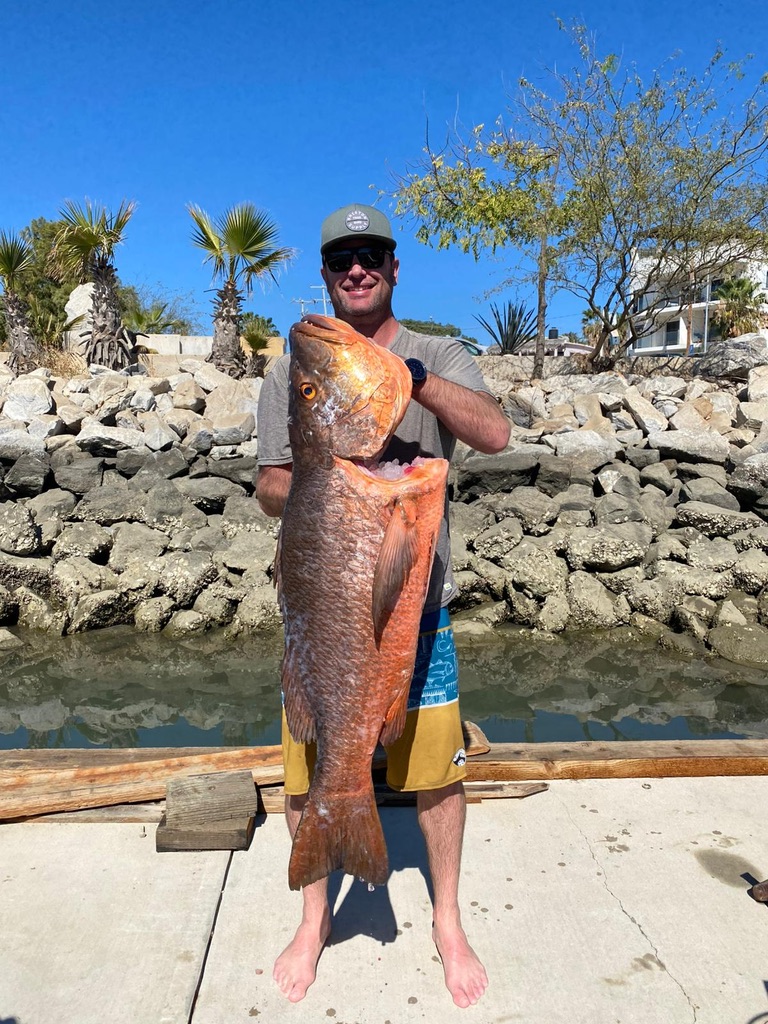
Yes. The catch goes home with you. Filleting at the dock, vacuum sealing and freezing are available, and most guests fly home with a cooler. Marlin are mostly released, with judgement on the day.
Yes, on fishing days. The crew rigs and handles the gear and hands you the rod when something eats. Guided spearfishing needs breath-hold experience and runs on a strict buddy system, which is the only legal way to spearfish in Mexico. Water, ice and snacks are normally aboard.