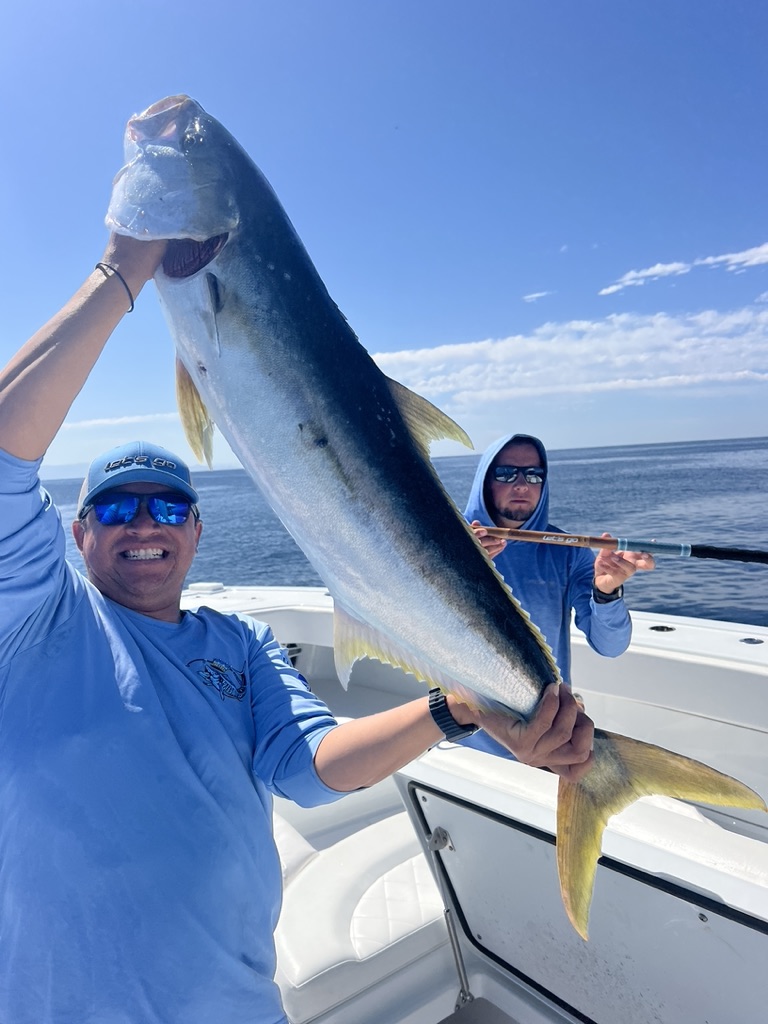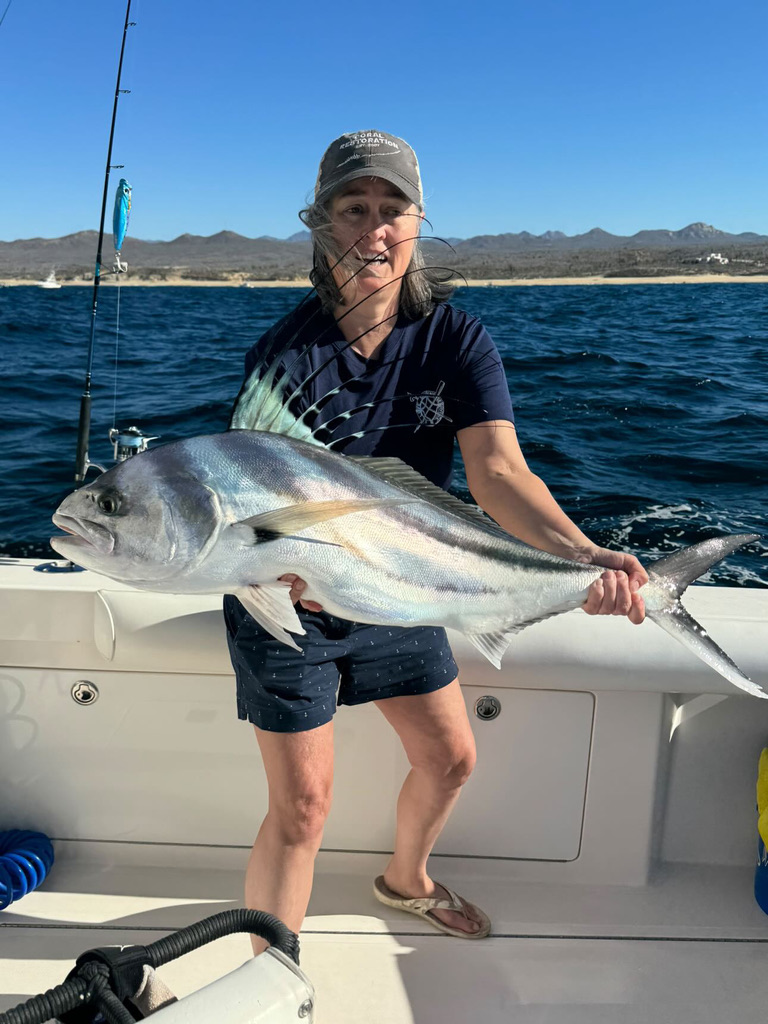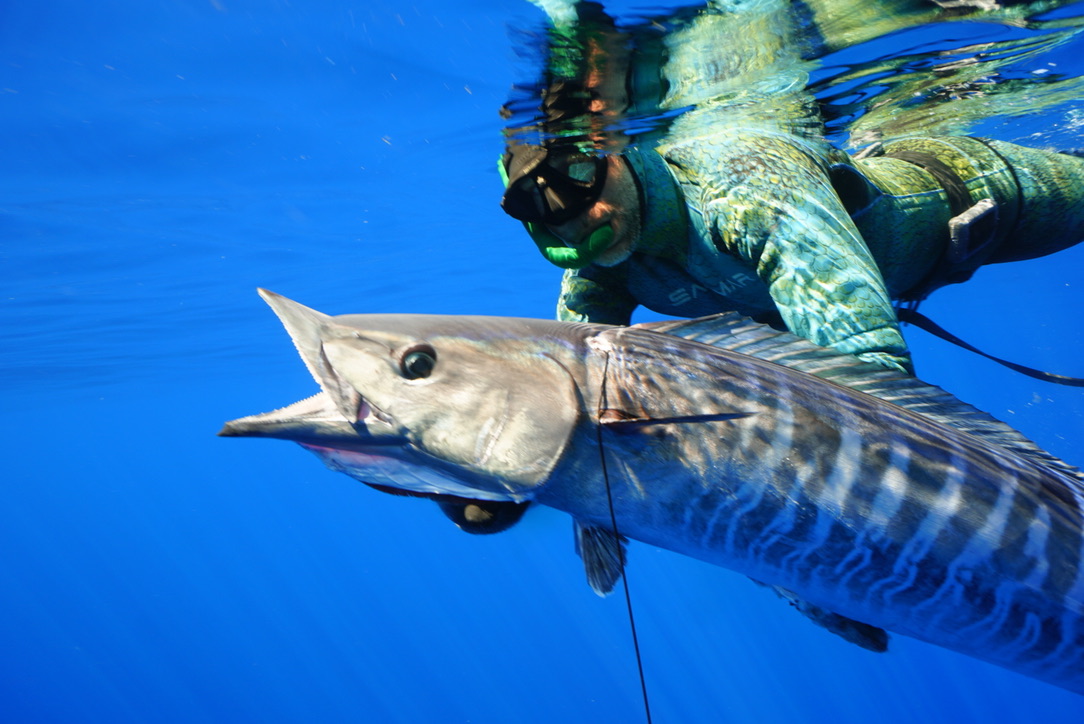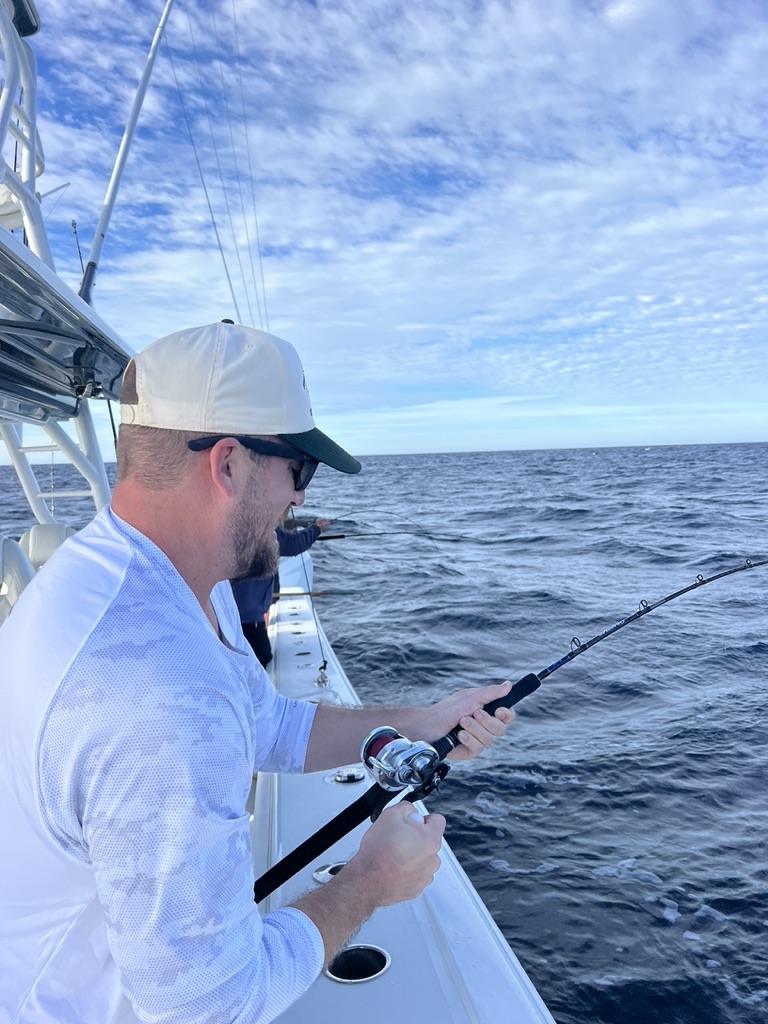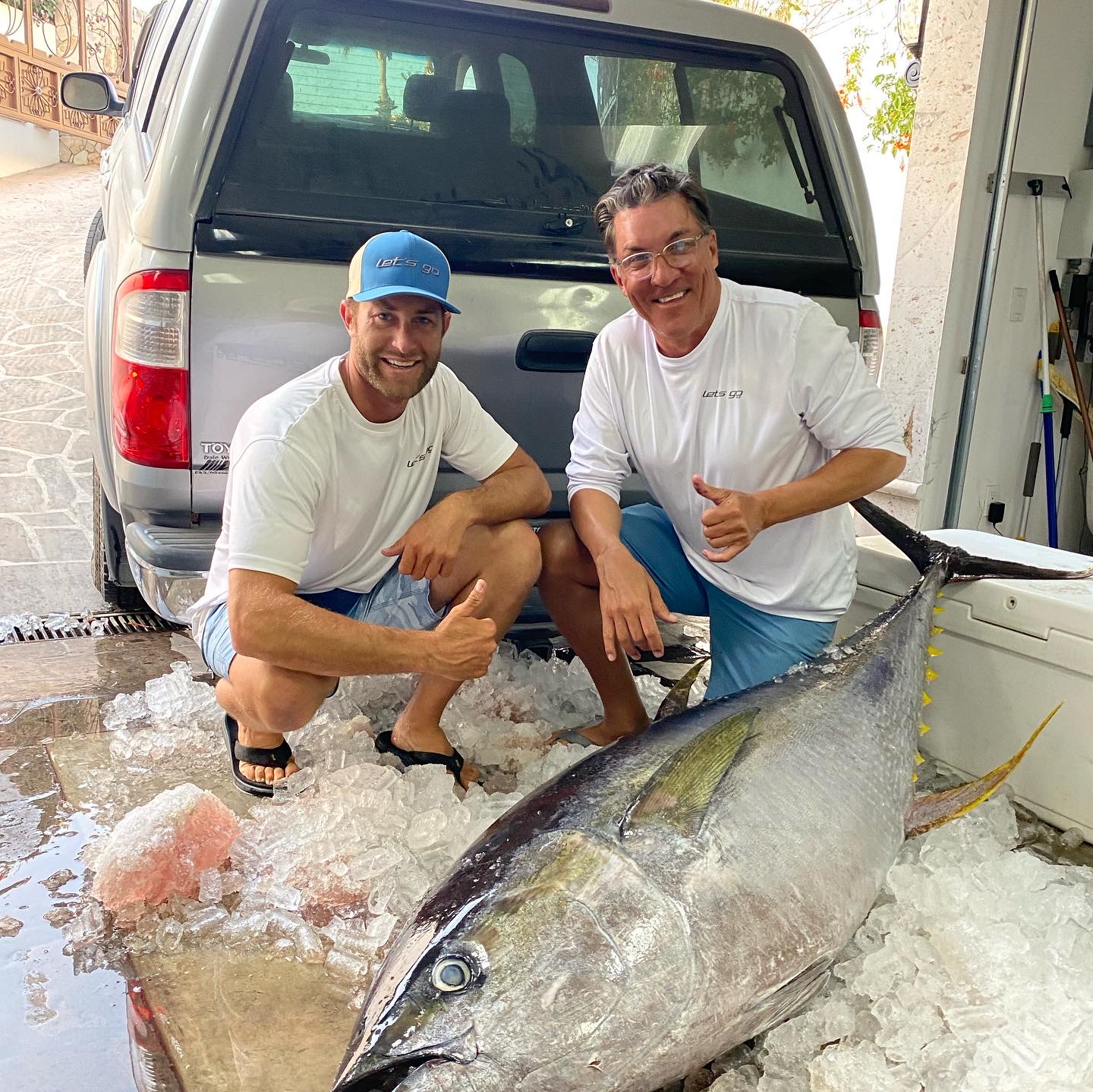
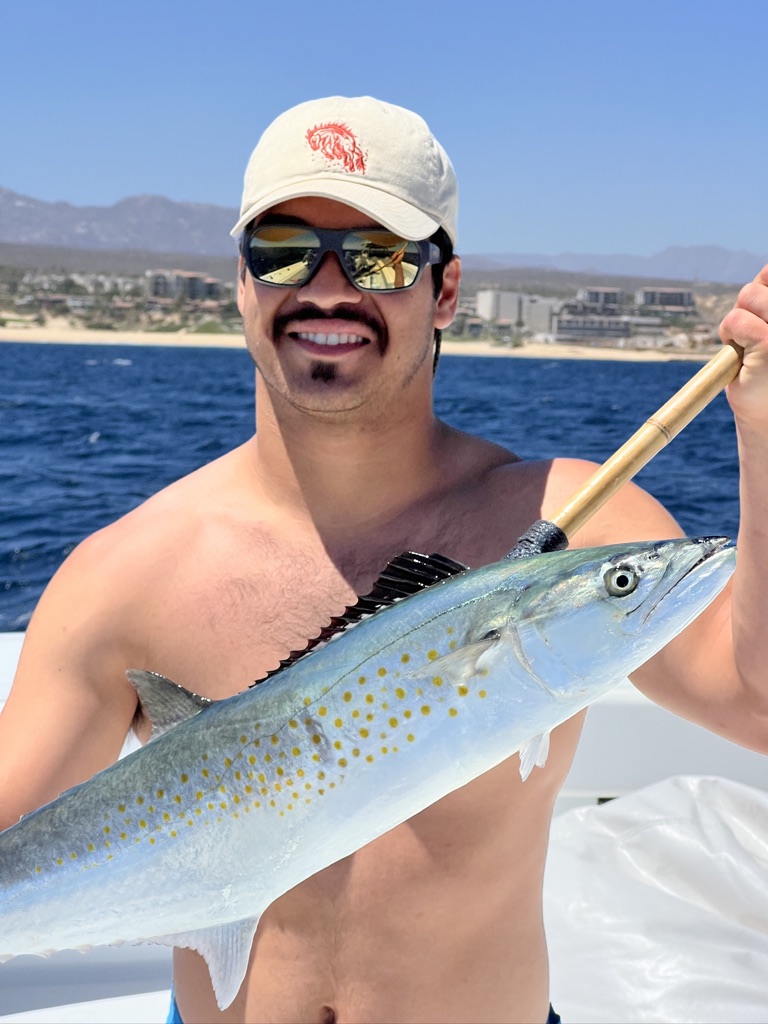
Sierra are the fish that makes a slow winter morning worth it. Small, fast, sharp toothed, and caught close to the beach on light tackle. They are also the best ceviche fish in Baja, eaten the same day. They do not freeze well at all, so plan on lunch rather than luggage.
Nobody flies to Cabo for a sierra. That is fine. Once you have caught a few, and eaten them, you understand why every panga on this coast has a sierra rig on board. They are quick, they hit a lure like they mean it, and they punch above their size on light gear.
They are a member of the mackerel family, related to wahoo and to the Spanish mackerels of other coasts. Look for the silver flanks with rows of bronze or gold spots, and the mouthful of small triangular teeth.
Sierra are a cool water fish by Cabo standards. Generally we see them from around late fall through into spring, with the best of it in the coldest water of the winter. In the height of summer they largely disappear from the inshore stretch we fish.
That makes them a good option in the same season as the yellowtail, and the two often share a trip. A morning on the rocks for yellowtail, then a slow troll along the beach for sierra on the way home, is a sensible winter day.
Slow trolling close to shore, over the shallow sand and along the edges of rock. Small spoons, feathers and shallow diving plugs, pulled behind the boat at a walking pace. When we find a school we turn and troll through it again.
They will also take a small metal jig cast and retrieved fast, which is more fun than trolling if you have the fish located and want to make a game of it. Light spinning gear, ten to twenty pound class, is all you need and is the right way to fish for them.
One practical note. Those teeth cut monofilament. We run a short piece of light wire or a heavier fluorocarbon bite leader, and we still lose lures. It is part of the deal.
Inshore, in the band from the surf line out to maybe a mile. The Pacific side beaches, the rocky stretches near the cape, and any place where bait is stacked in the shallows. Sierra follow small baitfish, so where the sardines are is where they are.
Birds tell you most of what you need to know. If terns are working a patch of water close to the beach in January, we will run over and look.
Fresh sierra is superb, and it is the classic fish for ceviche on this coast for a good reason. The flesh is soft and fine textured, it takes lime beautifully, and it is ready in minutes. It is also very good crumbed and fried, or thrown straight on a hot grill.
Here is the honest warning. Sierra does not keep. The flesh is soft and it goes mushy and strong in a day or two in the fridge, and it comes out of the freezer worse still. This is not a fish to fill a cooler with and fly home. Eat it the day you catch it, or the next morning at the latest.
What we usually suggest is keeping a few for the table that evening and releasing anything past that. Many of the restaurants around the marina will cook your catch for you, and to confirm on how to arrange that.
The short version of how a trip with Indigo Adventures works. Licences, deposits, boats and what happens to your catch. The full FAQ has the rest.
Read the full FAQ→Indigo Adventures is based in El Pescadero, on the Pacific side of Baja California Sur, a few minutes south of Todos Santos. Boats launch from three points: Punta Lobos beach in Todos Santos, San Jose del Cabo, and the Cabo San Lucas Marina. Which boat runs your trip decides where you meet us.
Custom fishing and spearfishing charters, freediving excursions, whale watching from mid December to April, and kayaking. Every trip is built around your group, your dates and the conditions rather than a fixed timetable, and almost every one goes out private.
Book online on the Book Now page, where availability is live and a 50 percent deposit holds the date. If you would rather we picked the trip, send an enquiry with who is coming, when you are here and what you want out of the day, and we will say which trip fits and which one does not.
No. Everyone fishing in Mexican waters needs a Mexican sportfishing licence, and each angler buys their own. We help you arrange it before the day so nobody is sorting paperwork on the dock. The same licence covers rod and spear.
Rarely. Almost every trip goes out as a private boat for you and your group. If a split makes sense for a small party we will say so when you enquire.
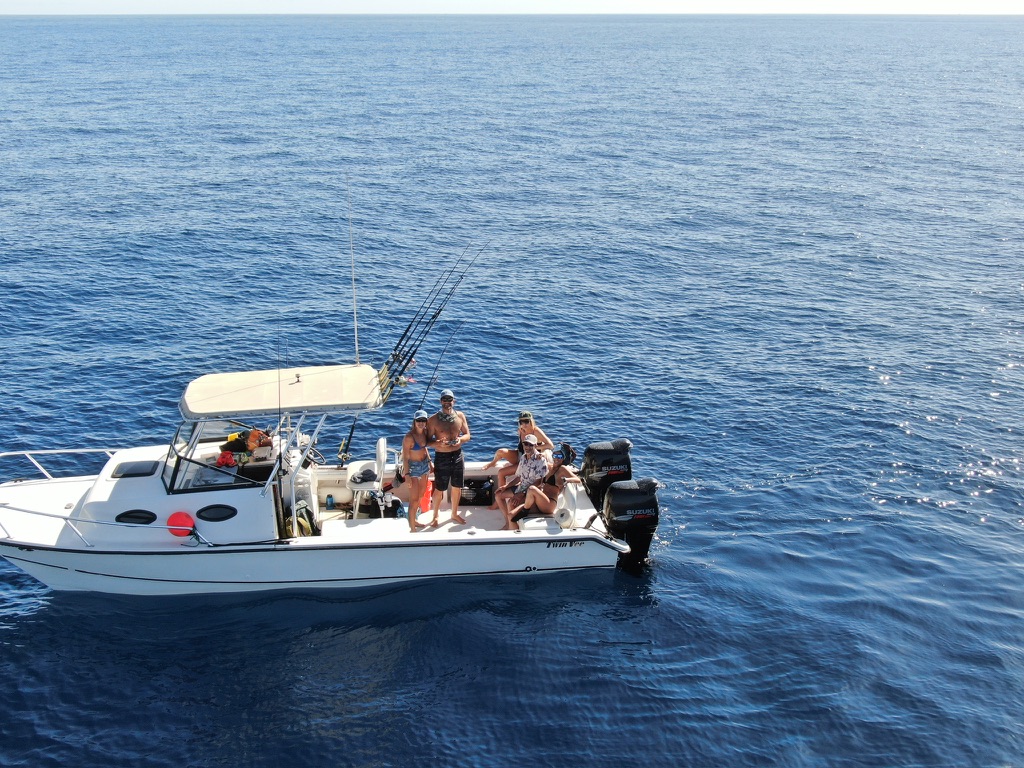
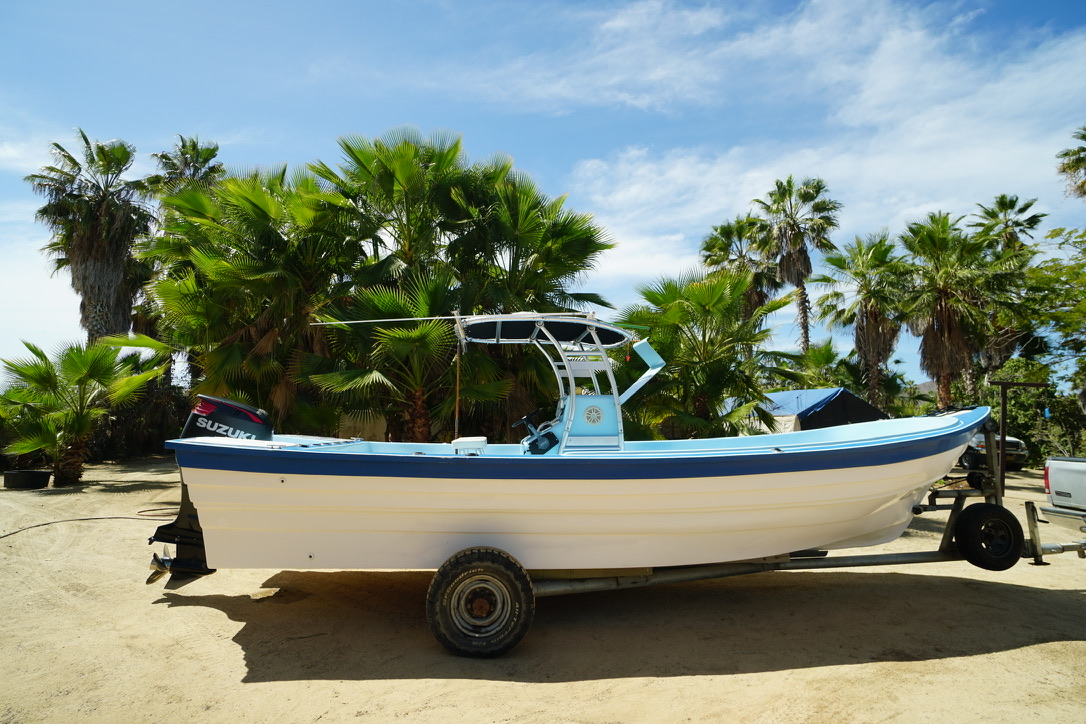
Three on the 24 foot Punta Lobos panga, up to four on La Ruca and La Morita, and up to six on Don Pancho and El Wahoo King. Whale watching numbers run a little higher because nobody is swinging a rod.
Yes. The catch goes home with you. Filleting at the dock, vacuum sealing and freezing are available, and most guests fly home with a cooler. Marlin are mostly released, with judgement on the day.
Yes, on fishing days. The crew rigs and handles the gear and hands you the rod when something eats. Guided spearfishing needs breath-hold experience and runs on a strict buddy system, which is the only legal way to spearfish in Mexico. Water, ice and snacks are normally aboard.