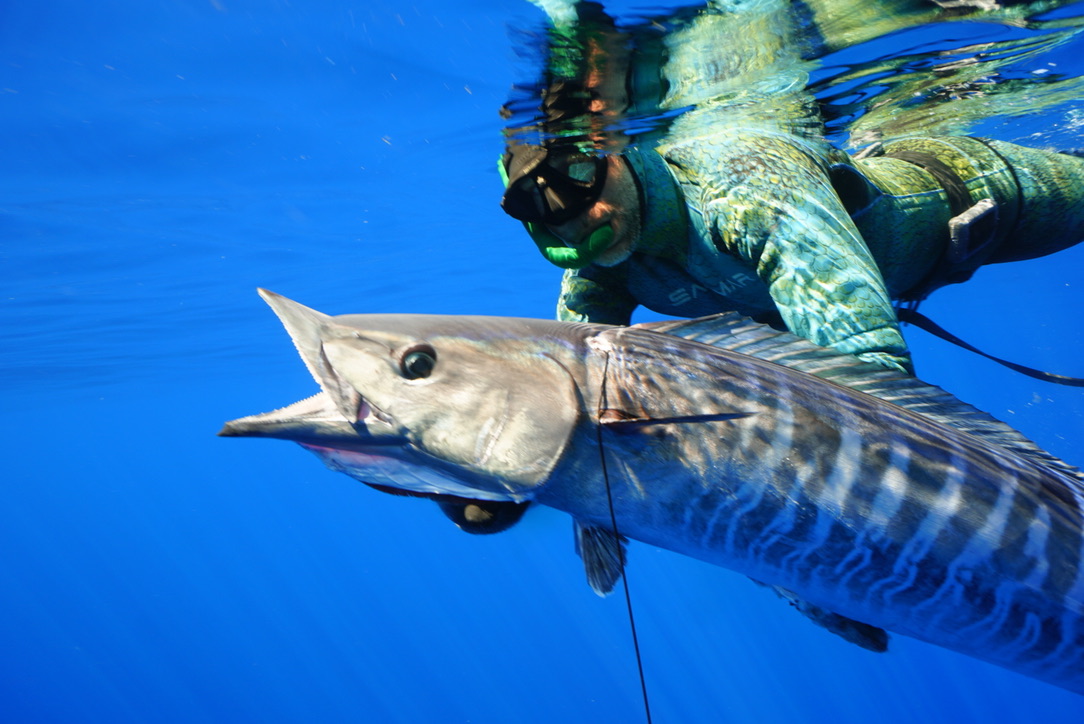
Wahoo are the fastest thing most anglers will ever hook. One hits a trolled lure at speed, empties a hundred yards of line before you have your hands on the rod, and keeps going. The teeth are why we run wire. The fillets are why nobody complains about the wire. Fall is our season.
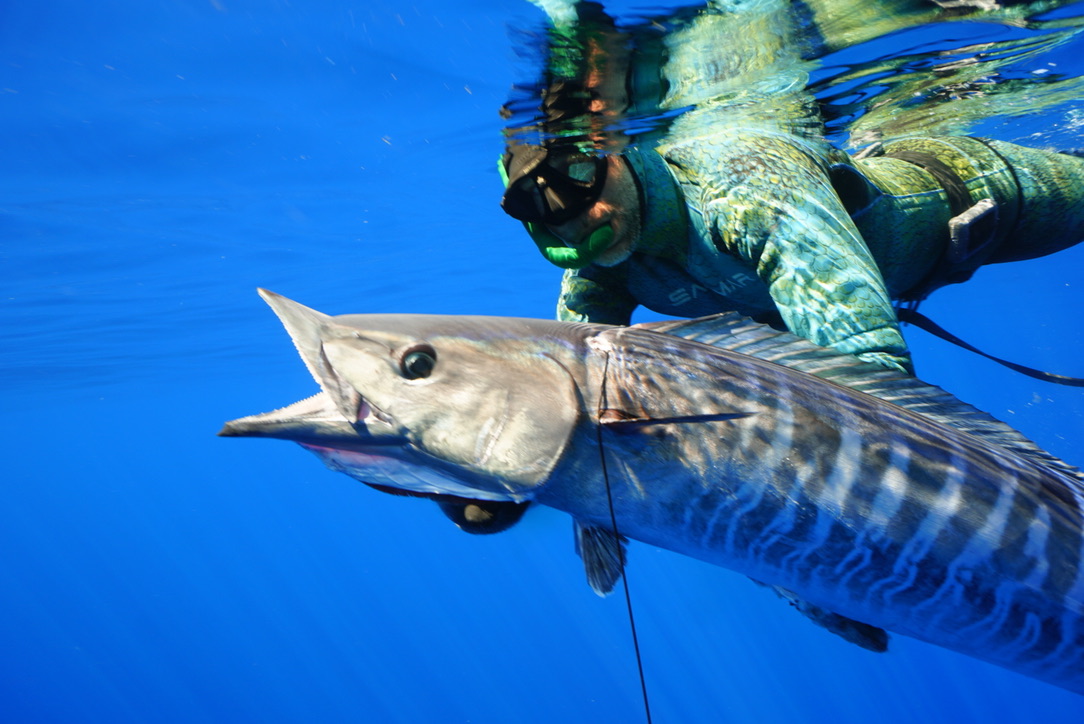
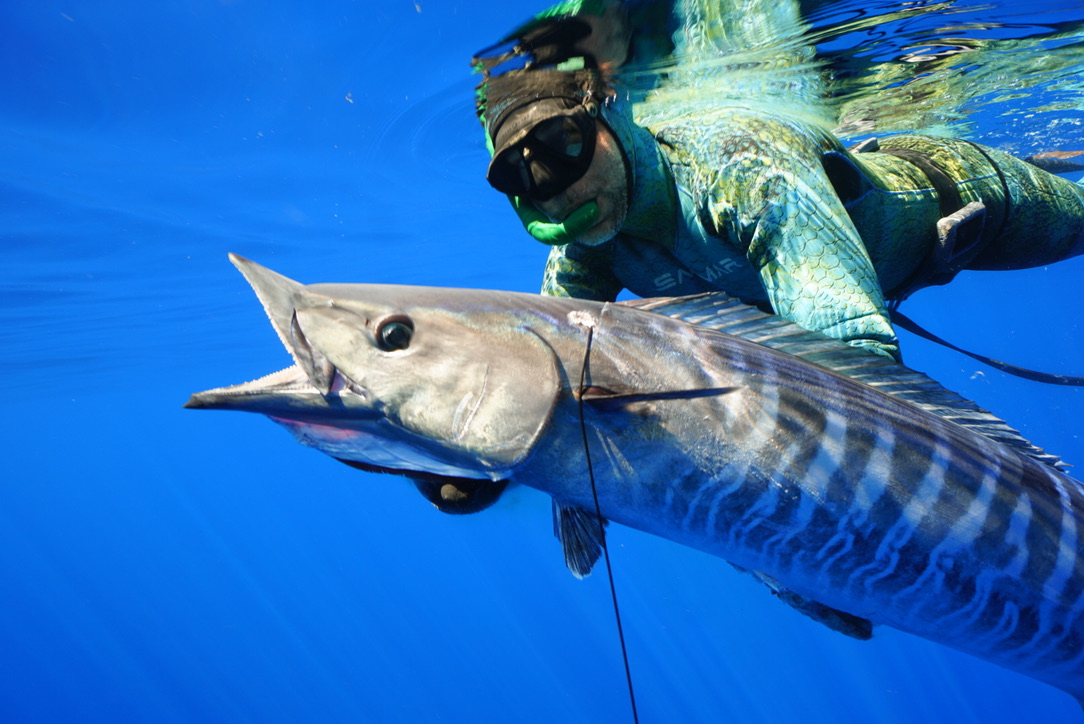
A wahoo is built like a torpedo with a jaw full of razors. In short bursts it is generally reckoned among the fastest fish in the ocean. That speed is the whole appeal. A wahoo does not creep up on a lure and inspect it. It arrives, and the reel is screaming before anyone on board has said a word.
The strike is the part people remember. Most of the fight is over inside a few minutes, because a wahoo spends nearly everything it has on the first run. You get thirty seconds of chaos, then a heavy, head-shaking pull up to the transom.
Fall is the season here. The water is at its warmest from roughly August into November most years, and that is when we see the most wahoo off Cabo. They show up as an incidental catch through the summer as well. Numbers generally thin once the water cools through the winter.
Moon phase matters more with wahoo than with most fish we chase. Plenty of captains in this region plan wahoo days around the water either side of a full moon. We do not treat that as a guarantee. It is a pattern worth respecting rather than a rule.
Wahoo hold on structure. Off Cabo that means drop-offs, ridges and high spots on both the Pacific side and up the Cortez side, plus any floating debris or temperature break we come across on the run out. Colour changes and current lines are always worth a pass.
They are not a schooling fish the way tuna are, but they are rarely alone. If we raise one, we turn around and work the same water again from a different angle. Small packs are common, and a second and third fish off the same spot happens often enough that we plan for it.
Fast trolling, and faster than most anglers expect. We generally pull lures somewhere in the twelve to eighteen knot range, sometimes quicker, because a wahoo can catch anything that swims and a slow bait looks wrong to it. Bullet-head lures, heavy jet heads and deep-diving plugs all have their day.
We also pull rigged dead bait built to swim at speed when conditions suit, and we will shut down and drop a jig if we mark fish stacked on a high spot. Most days, though, the answer is speed and a clean spread.
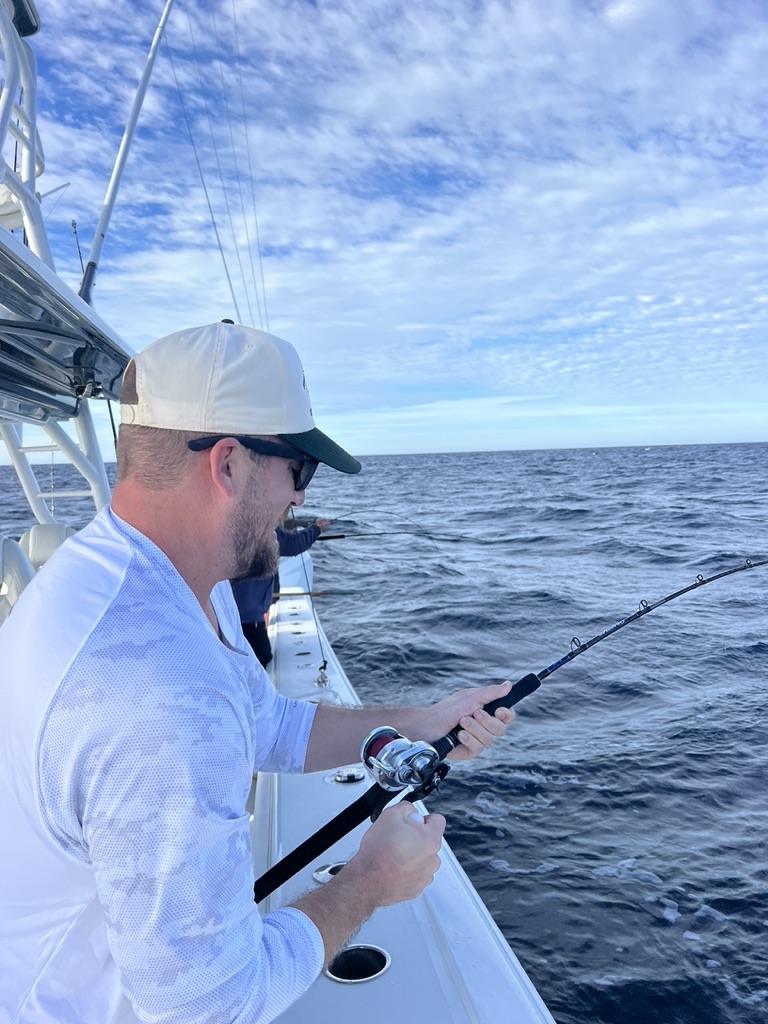
Tackle is heavier than the size of the fish suggests. Fifty pound class gear with a smooth drag is standard, because the first run is long and a sticky drag pops leaders. We set the drag lighter than a lot of anglers expect, for exactly that reason.
Wahoo teeth are blades set in a jaw that closes like shears. Monofilament does not survive contact with them. We run wire ahead of the lure on any spread where wahoo are a realistic target, and we accept that wire costs us a few bites from marlin and tuna, which see it and shy off.
That is the trade. Fluorocarbon gets more strikes and loses more wahoo. When wahoo are the goal, wire goes on. If you bring your own gear, hand it to the crew before we set the spread and we will look it over.
Handling a green wahoo at the transom is where people get hurt. Leave the gaffing and the boarding to the crew, and keep your hands well clear of the fish until it is in the box and the lid is down.
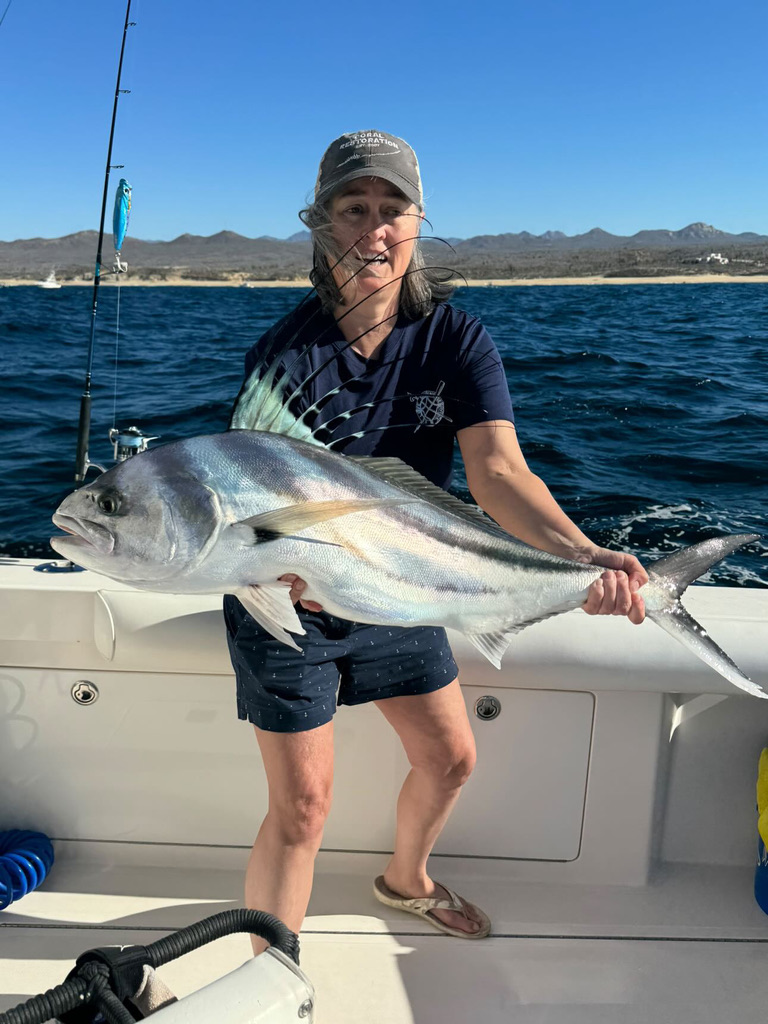
This is one of the best eating fish in the ocean. White, firm and mild, with a texture that takes high heat well. Grill it thick, sear it rare, or cut it for sashimi within a few hours of the strike. It is a lean fish, so it goes dry if you cook it all the way through.
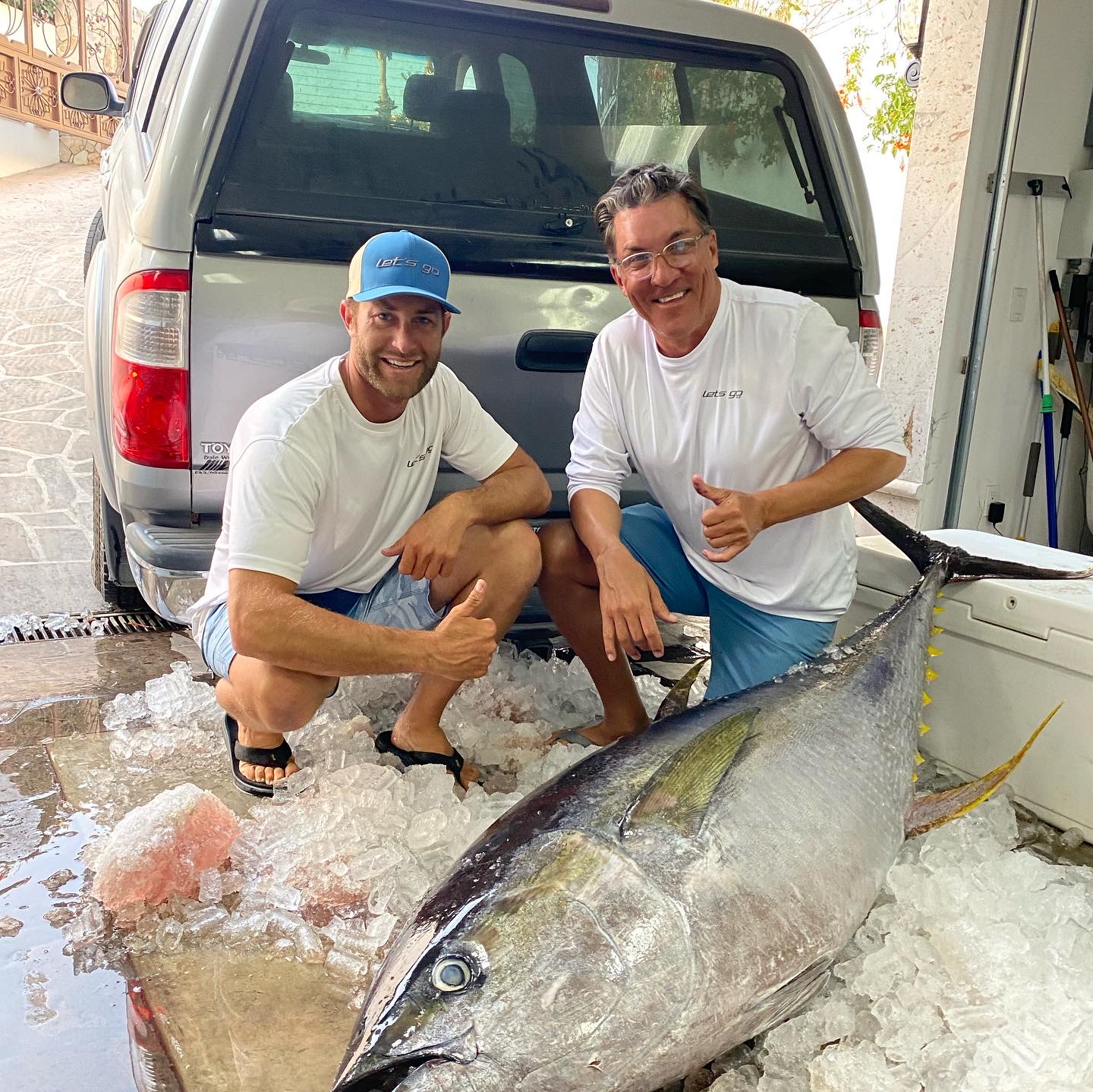
We keep wahoo, and we do not apologise for it. There is no sense releasing a bleeding fish that eats this well. Your catch gets cleaned and bagged at the marina, and if you want to take it further than dinner we will fillet it properly, vacuum seal it and freeze it so it travels home with you. Pricing and turnaround are still being confirmed.
The short version of how a trip with Indigo Adventures works. Licences, deposits, boats and what happens to your catch. The full FAQ has the rest.
Read the full FAQ→Indigo Adventures is based in El Pescadero, on the Pacific side of Baja California Sur, a few minutes south of Todos Santos. Boats launch from three points: Punta Lobos beach in Todos Santos, San Jose del Cabo, and the Cabo San Lucas Marina. Which boat runs your trip decides where you meet us.
Custom fishing and spearfishing charters, freediving excursions, whale watching from mid December to April, and kayaking. Every trip is built around your group, your dates and the conditions rather than a fixed timetable, and almost every one goes out private.
Book online on the Book Now page, where availability is live and a 50 percent deposit holds the date. If you would rather we picked the trip, send an enquiry with who is coming, when you are here and what you want out of the day, and we will say which trip fits and which one does not.
No. Everyone fishing in Mexican waters needs a Mexican sportfishing licence, and each angler buys their own. We help you arrange it before the day so nobody is sorting paperwork on the dock. The same licence covers rod and spear.
Rarely. Almost every trip goes out as a private boat for you and your group. If a split makes sense for a small party we will say so when you enquire.
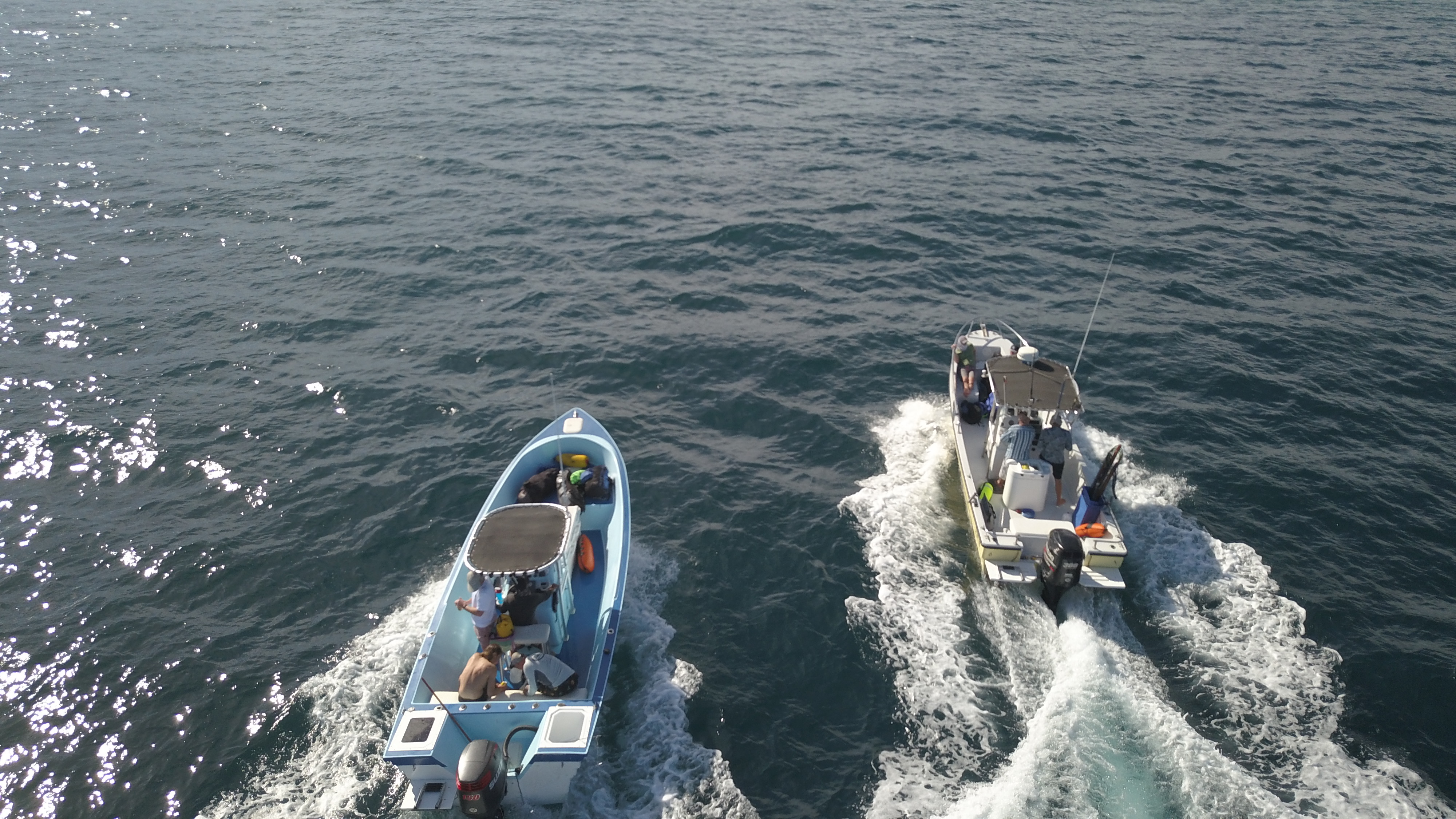
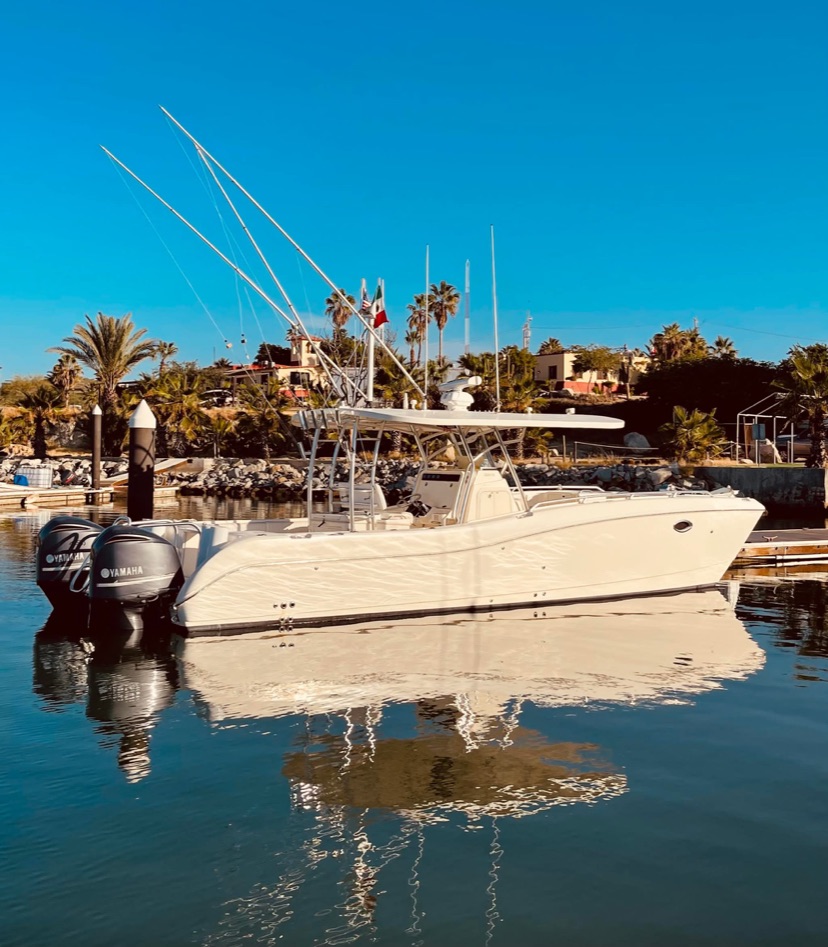
Three on the 24 foot Punta Lobos panga, up to four on La Ruca and La Morita, and up to six on Don Pancho and El Wahoo King. Whale watching numbers run a little higher because nobody is swinging a rod.
Yes. The catch goes home with you. Filleting at the dock, vacuum sealing and freezing are available, and most guests fly home with a cooler. Marlin are mostly released, with judgement on the day.
Yes, on fishing days. The crew rigs and handles the gear and hands you the rod when something eats. Guided spearfishing needs breath-hold experience and runs on a strict buddy system, which is the only legal way to spearfish in Mexico. Water, ice and snacks are normally aboard.