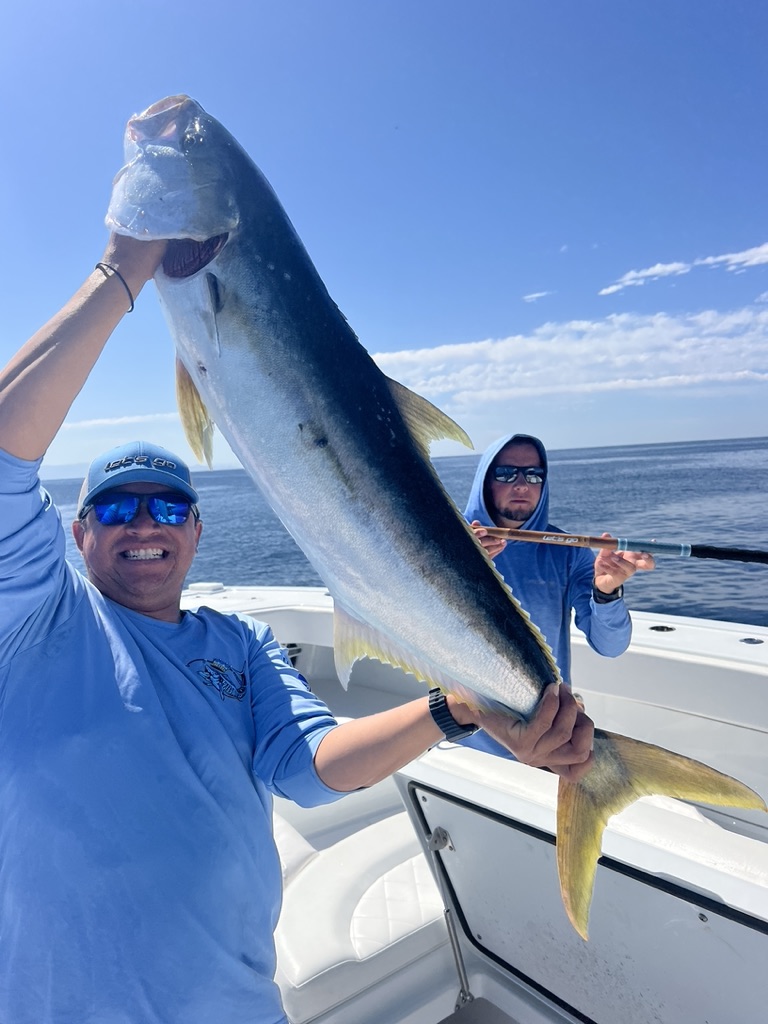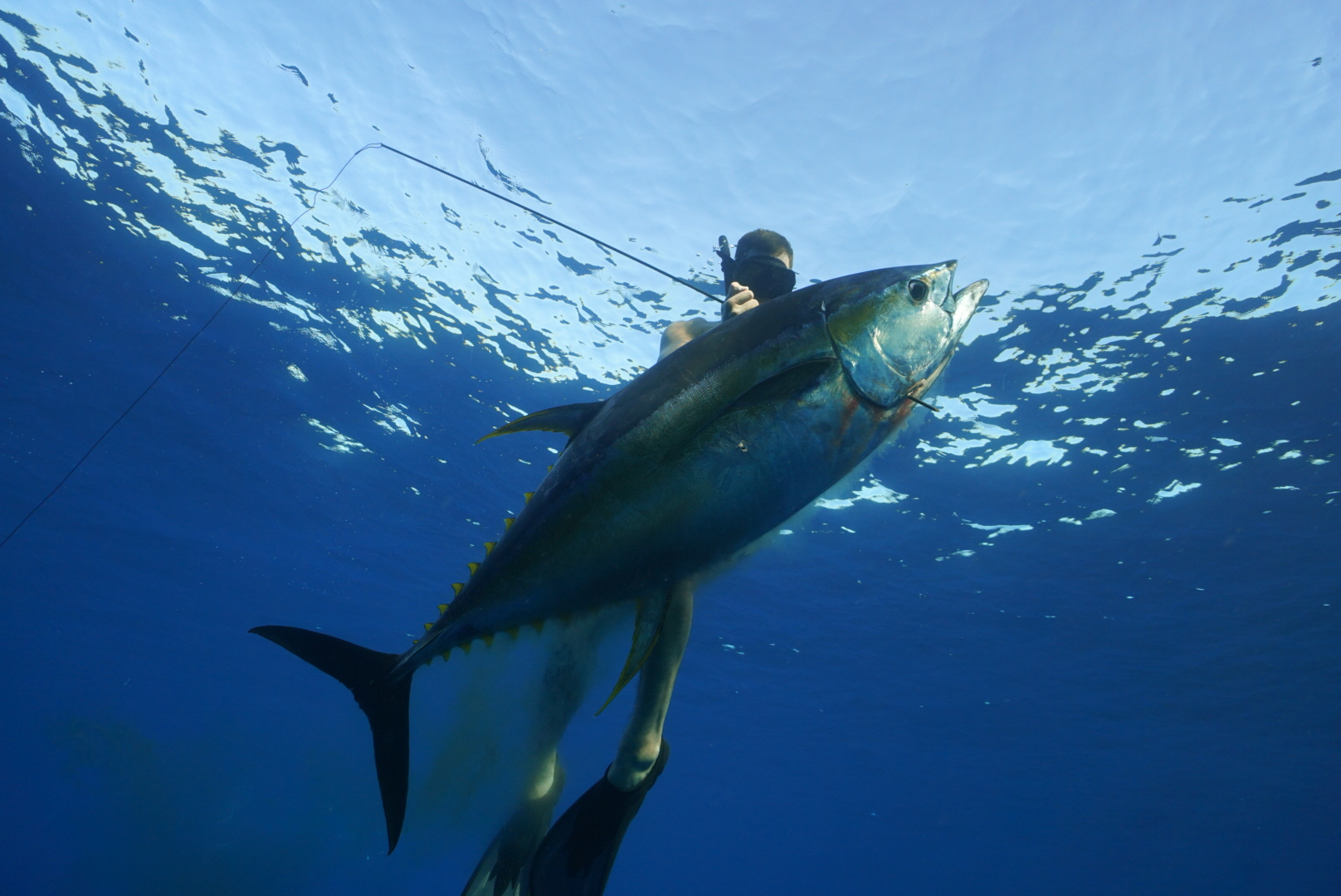
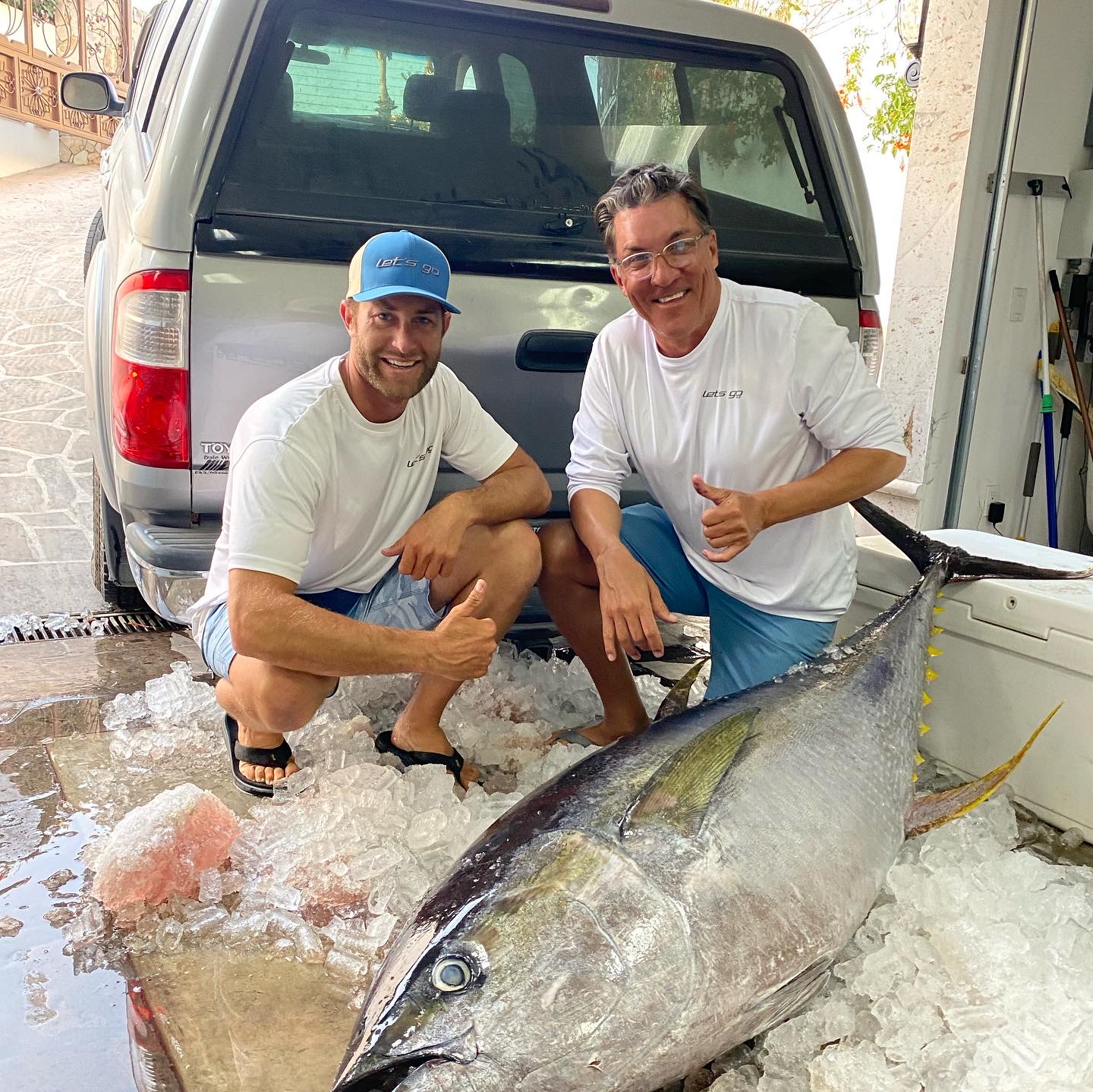
Yellowfin tuna is the fish that answers the question of what you are having for dinner. They range from twenty pound footballs you can catch all afternoon to genuine cows over two hundred pounds that will take an hour of your life and give it back better. Best eating fish in this water, no argument.
When someone says they want to catch tuna in Cabo, the first thing we need to sort out is which tuna trip they mean, because there are two and they barely resemble each other.
The first is football tuna. Fish in the fifteen to forty pound range, often found under porpoise, caught in numbers, hard fighting on light gear, and outstanding on the table. This is a fun, productive, everybody catches something kind of day.
The second is cow hunting. Fish over two hundred pounds, found on and around the deep structure, caught one at a time if at all, and capable of putting a strong adult on the floor. This is a specialist trip and it is not for everyone.
Yellowfin are around a good part of the year, but the fishery is best when the water is warm. Summer through fall is the strongest stretch, with the bigger fish typically showing later in that window.
Winter and early spring see fewer tuna and smaller average size, though they never fully disappear.
Gordo Banks, off the San Jose del Cabo side, is the name most associated with big yellowfin in this region and it deserves the reputation. Deep structure, current, and bait combine there in a way that holds serious fish.
Beyond that, we look for porpoise. Yellowfin travel with them, and a spinning porpoise school on the horizon is often the fastest route to a bent rod. We also work floating debris, temperature breaks, and bird activity.
Live bait is the heart of it. We get bait in the morning, and then it is a matter of putting a live one where the fish are and letting it swim naturally. On the smaller fish that is straightforward. On the big ones, bait selection, hook placement, and how little tension you leave on the line all matter enormously.
We troll to locate fish and to cover water between spots. We will also chunk or fly line depending on how the fish are behaving on the day.
For the deep structure fish, dropping a bait down to them is often the game, and that requires patience from everyone on board. A cow bite is uncommon. When it comes, the whole boat has a job.
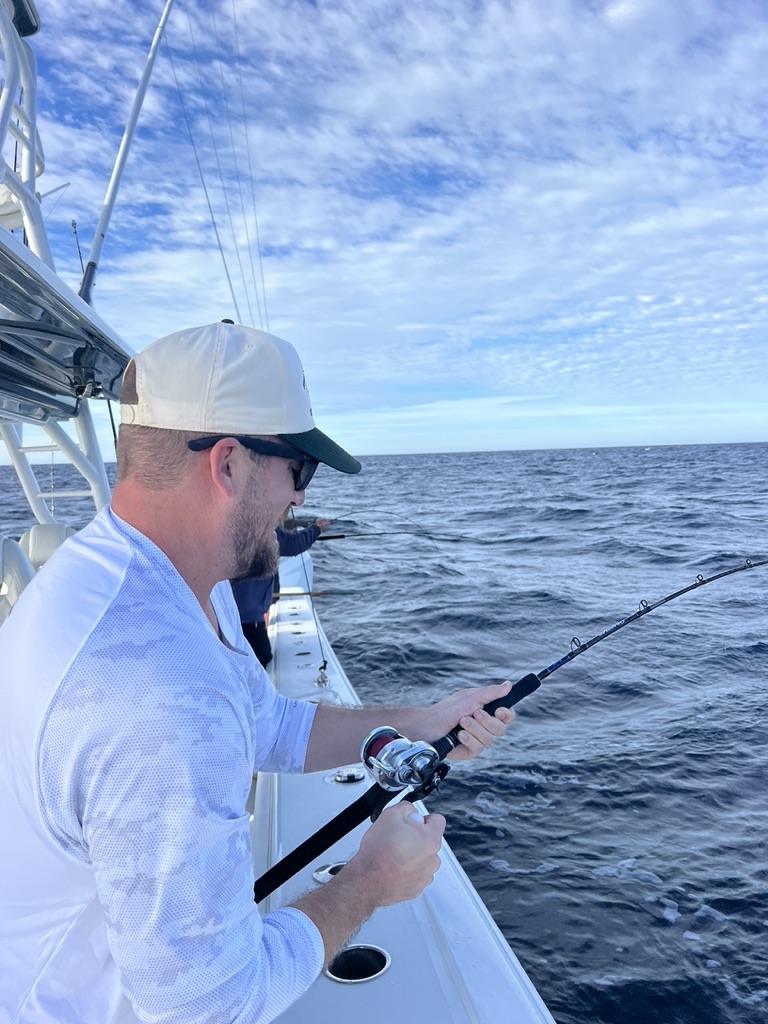
Nobody warns people properly about this so we will. A large yellowfin does not jump and it does not tire quickly. It swims in circles beneath the boat and pulls straight down, and it will do that for as long as it takes. Anglers regularly underestimate how physical it is.
Football tuna are a different story and genuinely fun on light gear. Fast, hard runs, over in a few minutes, and then you do it again.
Yellowfin is the reason to bring a cooler. We keep tuna, we bleed and ice them immediately on the boat, and the difference that makes to the eating quality is not subtle.
Your catch goes home with you. We are happy to fillet it at the dock and point you toward getting it cooked at a local restaurant that same evening, and if you would rather take it with you we will vacuum seal and freeze it for the flight. Pricing and turnaround are still being confirmed.
We do not fill the boat for the sake of a photo. We keep what will get eaten and we release the rest, particularly on days when the smaller fish are thick.
Football tuna come out of half day and full day trips. Cows come out of full day and multi day trips fished specifically for them, usually with an early departure of to confirm to be on the structure at first light.
The short version of how a trip with Indigo Adventures works. Licences, deposits, boats and what happens to your catch. The full FAQ has the rest.
Read the full FAQ→Indigo Adventures is based in El Pescadero, on the Pacific side of Baja California Sur, a few minutes south of Todos Santos. Boats launch from three points: Punta Lobos beach in Todos Santos, San Jose del Cabo, and the Cabo San Lucas Marina. Which boat runs your trip decides where you meet us.
Custom fishing and spearfishing charters, freediving excursions, whale watching from mid December to April, and kayaking. Every trip is built around your group, your dates and the conditions rather than a fixed timetable, and almost every one goes out private.
Book online on the Book Now page, where availability is live and a 50 percent deposit holds the date. If you would rather we picked the trip, send an enquiry with who is coming, when you are here and what you want out of the day, and we will say which trip fits and which one does not.
No. Everyone fishing in Mexican waters needs a Mexican sportfishing licence, and each angler buys their own. We help you arrange it before the day so nobody is sorting paperwork on the dock. The same licence covers rod and spear.
Rarely. Almost every trip goes out as a private boat for you and your group. If a split makes sense for a small party we will say so when you enquire.
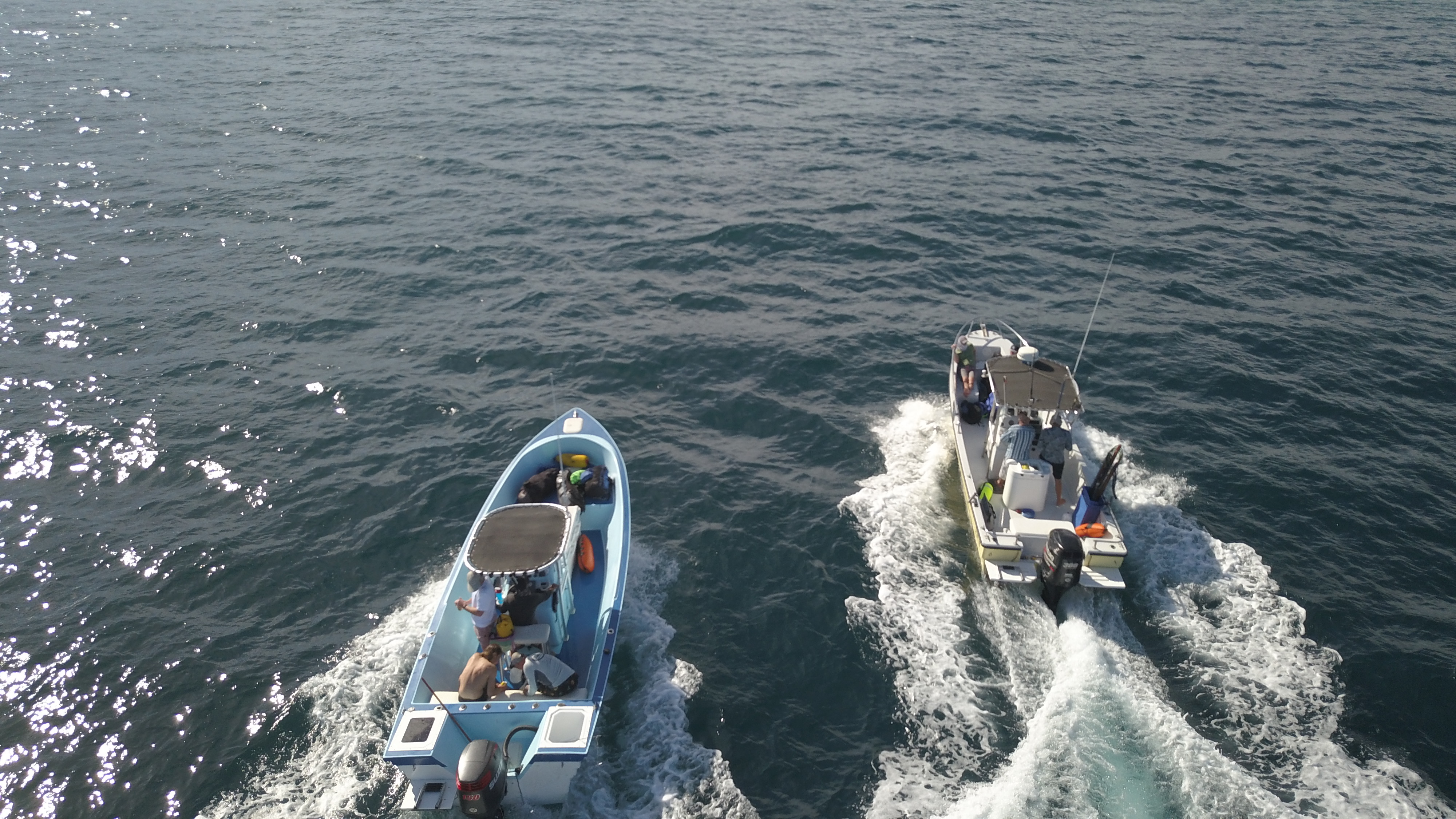
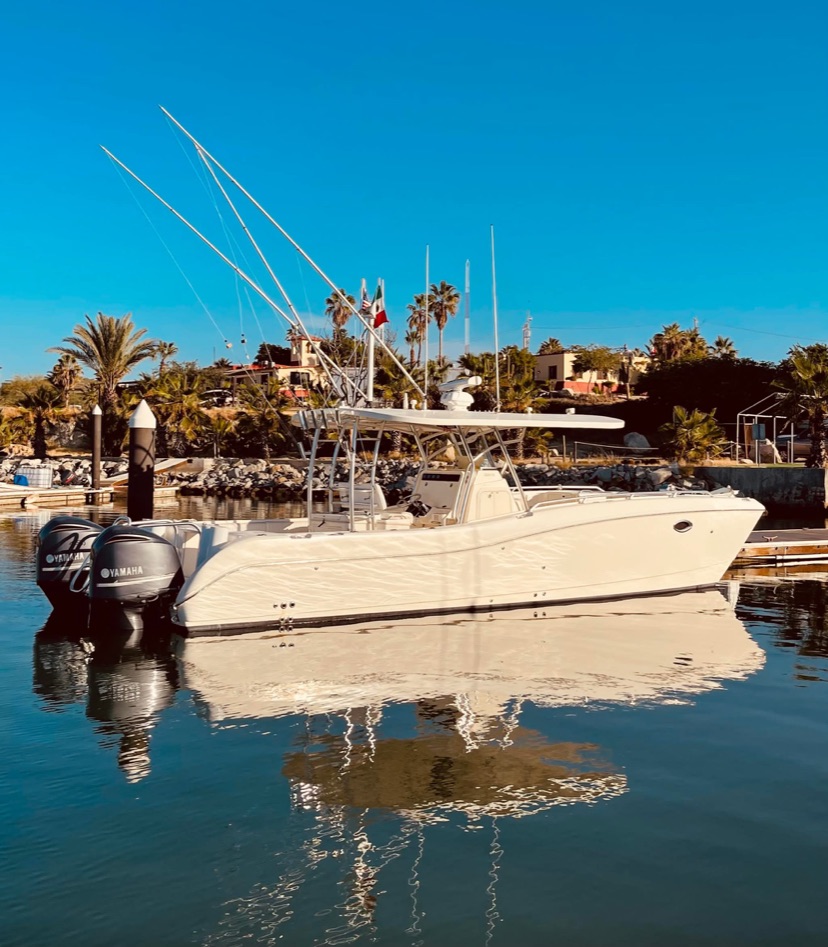
Three on the 24 foot Punta Lobos panga, up to four on La Ruca and La Morita, and up to six on Don Pancho and El Wahoo King. Whale watching numbers run a little higher because nobody is swinging a rod.
Yes. The catch goes home with you. Filleting at the dock, vacuum sealing and freezing are available, and most guests fly home with a cooler. Marlin are mostly released, with judgement on the day.
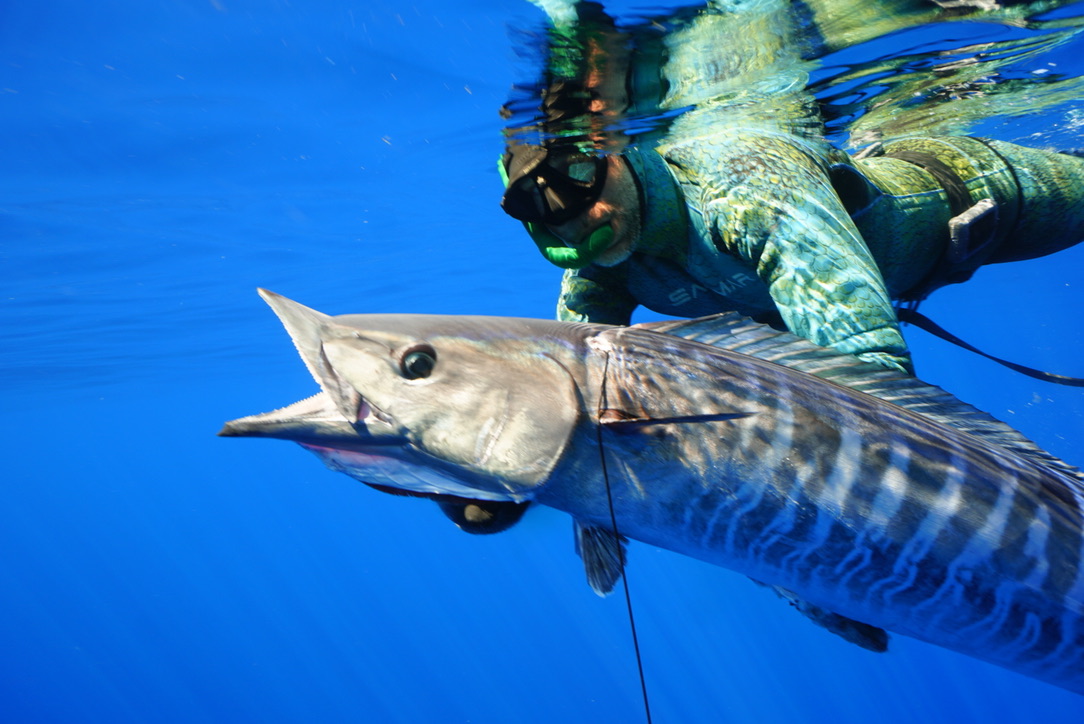
Yes, on fishing days. The crew rigs and handles the gear and hands you the rod when something eats. Guided spearfishing needs breath-hold experience and runs on a strict buddy system, which is the only legal way to spearfish in Mexico. Water, ice and snacks are normally aboard.