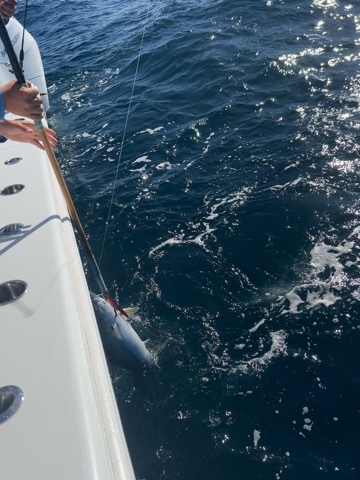
Most billfish caught out of Cabo go back in the water. A release only counts if the fish swims off and lives, and whether that happens is decided by a handful of things that occur in the first few minutes: how long the fight ran, what hook was in the fish, and how it was handled at the side of the boat.
Marlin and sailfish grow slowly, they are not good eating, and their real value is as fish that someone else gets to catch next season. Releasing them is standard practice on sport boats out of Cabo.
A release is not automatically a survival. Satellite tag studies consistently show that billfish released in good condition survive at high rates, and that fish released after very long fights, deep hooking or rough handling do far worse. What happens on the boat decides which group your fish ends up in.
A fish fights on anaerobic effort. Lactic acid builds in the muscle and the blood, body temperature climbs, and past a certain point the damage is not survivable even though the fish swims away looking healthy. Short fights save fish.
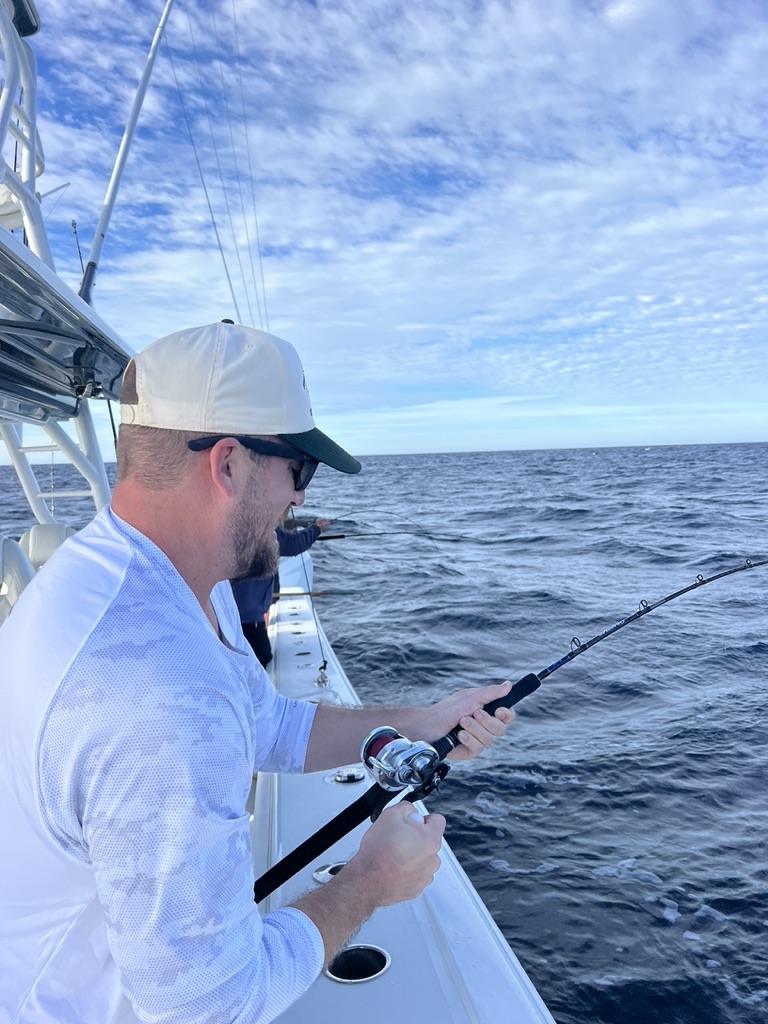
Short fights come from using tackle heavy enough for the animal, keeping steady pressure instead of pumping and giving slack, and letting the captain use the boat. Backing down on a fish shortens a fight enormously. Very light line looks sporting, and on a big fish it is often the thing that kills it.
If you are new, the instruction is simple. Keep the rod loaded. Wind on the way down. Never give slack. Do not stop for photos in the middle of the fight.
Circle hooks are the single biggest improvement available in bait fishing. The shape means the hook slides back to the corner of the jaw and rotates home there instead of being swallowed. Gut hooked fish bleed internally and die. Corner hooked fish generally do not.
Non offset circle hooks are the standard for release work. Crushing or filing the barb makes removal quicker and costs you very little on a fish you keep tight.
With circle hooks you never strike. Let the fish turn away with the bait, then wind until the line comes tight and the rod loads itself.
Keep the fish in the water. A billfish is built to be supported by water on every side, and lifting one aboard by the bill can damage its organs and its jaw for the sake of a photo.
Leader handling is the crew's job and it is the most dangerous moment of the day. When the leader comes to hand, a wrap of line around a glove and a green fish that decides to run is how people get pulled over the side. Stay clear of the corner, keep your hands off the leader, and do not crowd whoever is on it.
If the hook is in the corner of the jaw and reachable, it comes out with a dehooker. If it is deep, the leader gets cut as close to the hook as can be managed safely. A cut leader on a deeply hooked fish is far better than digging around inside it.
A tired fish needs water moving over its gills before it can swim on its own. The crew will hold the bill and idle the boat forward so water flows the right way through the mouth and out the gill plates. That can take several minutes and it is time well spent.
You will feel the moment the fish comes back. The body stiffens, colour floods back into it, the tail starts to beat, and it kicks out of the hand. Photos happen while the fish is in the water alongside, not in someone's arms. A fish out of water is on a clock and the clock is short.
Sometimes a fish is bleeding heavily from the gills, or has been hooked deep and is clearly not going to recover. Putting that fish back so it can sink and die helps nobody. Where the species and the regulations allow it, keeping that fish is the honest choice, and that call belongs to the captain.
The reverse holds too. A fish that is strong at the boat should go back regardless of who wanted a picture with it.
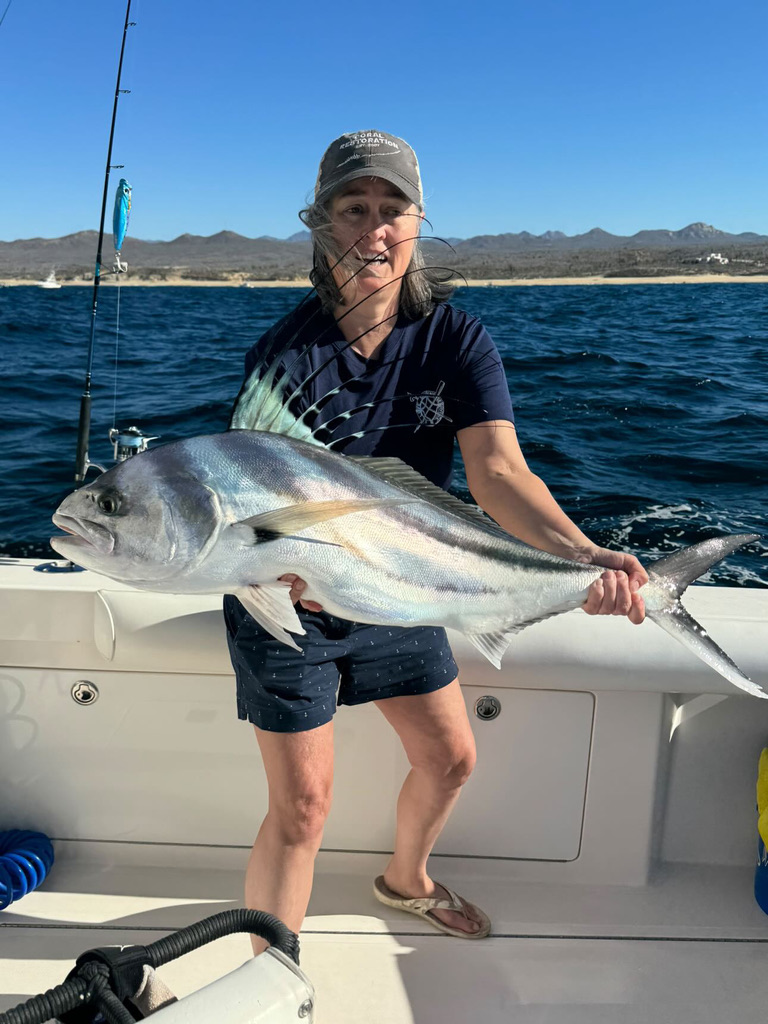
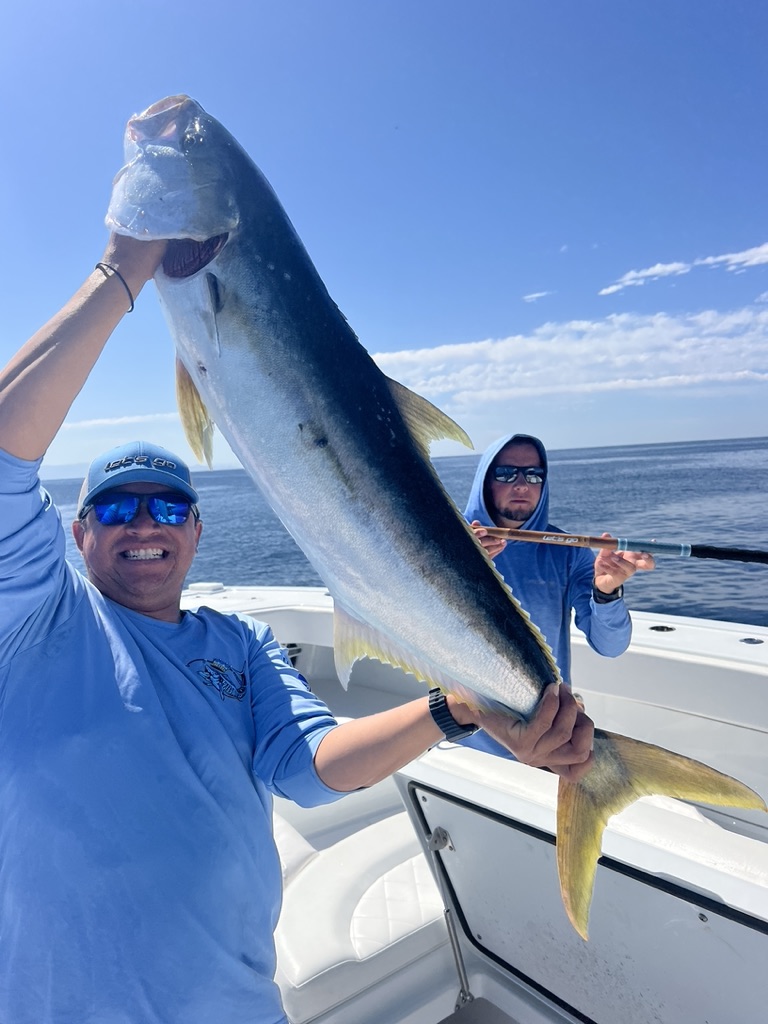
Dorado, tuna and wahoo are good eating and are commonly kept for the table within legal limits. Billfish are generally released. Mexican sportfishing regulations reserve certain species for sport fishing, set daily bag limits by species, and require anglers aboard to hold a valid licence. Those rules change over time and it is worth checking the current version rather than trusting a page you read once.
A licence is required for everyone fishing aboard. It is not included in the price of the trip, you buy your own, and we will help you arrange it before you go out.
On our boat marlin are mostly released. That is normal practice rather than an absolute rule, because a fish that is bleeding heavily or is clearly not going to recover is a different situation, and that judgement belongs to the captain on the day. A strong fish at the boat goes back.
The current bag limits by species: to confirm.
The short version of how a trip with Indigo Adventures works. Licences, deposits, boats and what happens to your catch. The full FAQ has the rest.
Read the full FAQ→Indigo Adventures is based in El Pescadero, on the Pacific side of Baja California Sur, a few minutes south of Todos Santos. Boats launch from three points: Punta Lobos beach in Todos Santos, San Jose del Cabo, and the Cabo San Lucas Marina. Which boat runs your trip decides where you meet us.
Custom fishing and spearfishing charters, freediving excursions, whale watching from mid December to April, and kayaking. Every trip is built around your group, your dates and the conditions rather than a fixed timetable, and almost every one goes out private.
Book online on the Book Now page, where availability is live and a 50 percent deposit holds the date. If you would rather we picked the trip, send an enquiry with who is coming, when you are here and what you want out of the day, and we will say which trip fits and which one does not.
No. Everyone fishing in Mexican waters needs a Mexican sportfishing licence, and each angler buys their own. We help you arrange it before the day so nobody is sorting paperwork on the dock. The same licence covers rod and spear.
Rarely. Almost every trip goes out as a private boat for you and your group. If a split makes sense for a small party we will say so when you enquire.
Three on the 24 foot Punta Lobos panga, up to four on La Ruca and La Morita, and up to six on Don Pancho and El Wahoo King. Whale watching numbers run a little higher because nobody is swinging a rod.
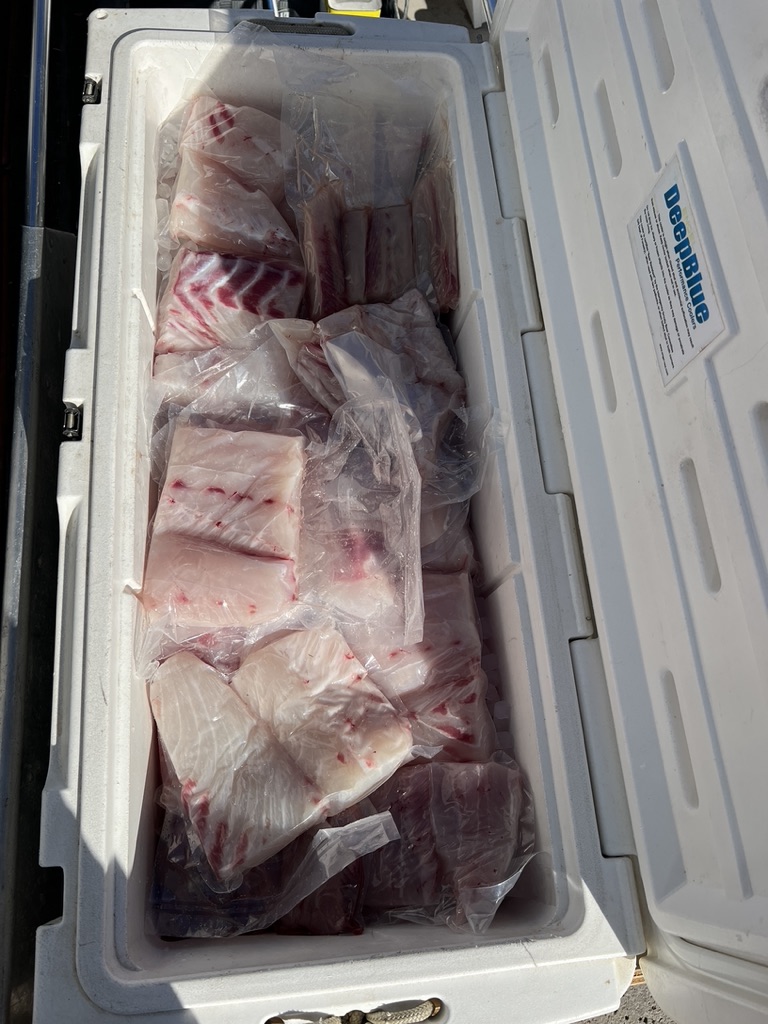
Yes. The catch goes home with you. Filleting at the dock, vacuum sealing and freezing are available, and most guests fly home with a cooler. Marlin are mostly released, with judgement on the day.
Yes, on fishing days. The crew rigs and handles the gear and hands you the rod when something eats. Guided spearfishing needs breath-hold experience and runs on a strict buddy system, which is the only legal way to spearfish in Mexico. Water, ice and snacks are normally aboard.