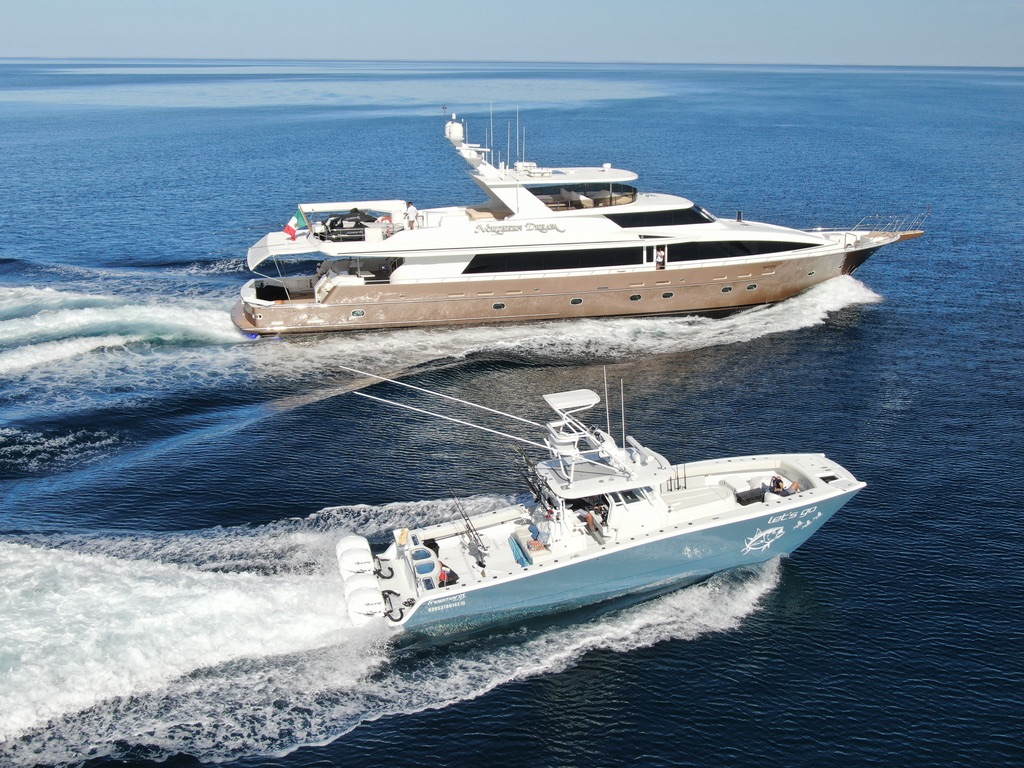
Trolling is how most billfish and tuna get caught out of Cabo. The boat pulls a set of lures and baits behind it at a steady speed, covering water until something eats. From the cockpit it can look like waiting. It is not. Once you understand what is happening behind the boat, the waiting turns into watching.
Trolling means pulling lures or rigged baits through the water behind a moving boat so they swim like small fish trying to get away. The boat is the search tool. Rather than anchoring up and hoping, you cover miles of open water and let the gear find the fish. Off Cabo this is the standard way of hunting striped marlin, blue and black marlin, sailfish, yellowfin tuna, dorado and wahoo, because those fish move and the water they like moves with them.
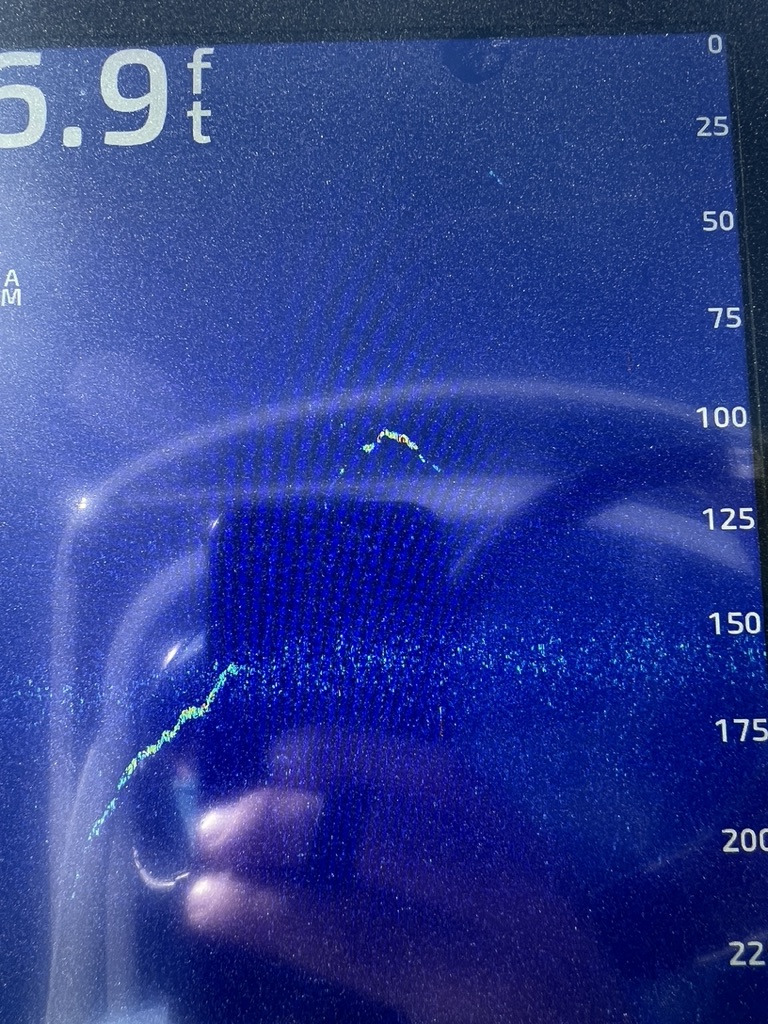
A crew is not just driving in a straight line. They are reading water colour, temperature breaks, current lines, floating debris, working birds and bait showing on the sounder, then steering the spread through the parts of the ocean most likely to hold something.
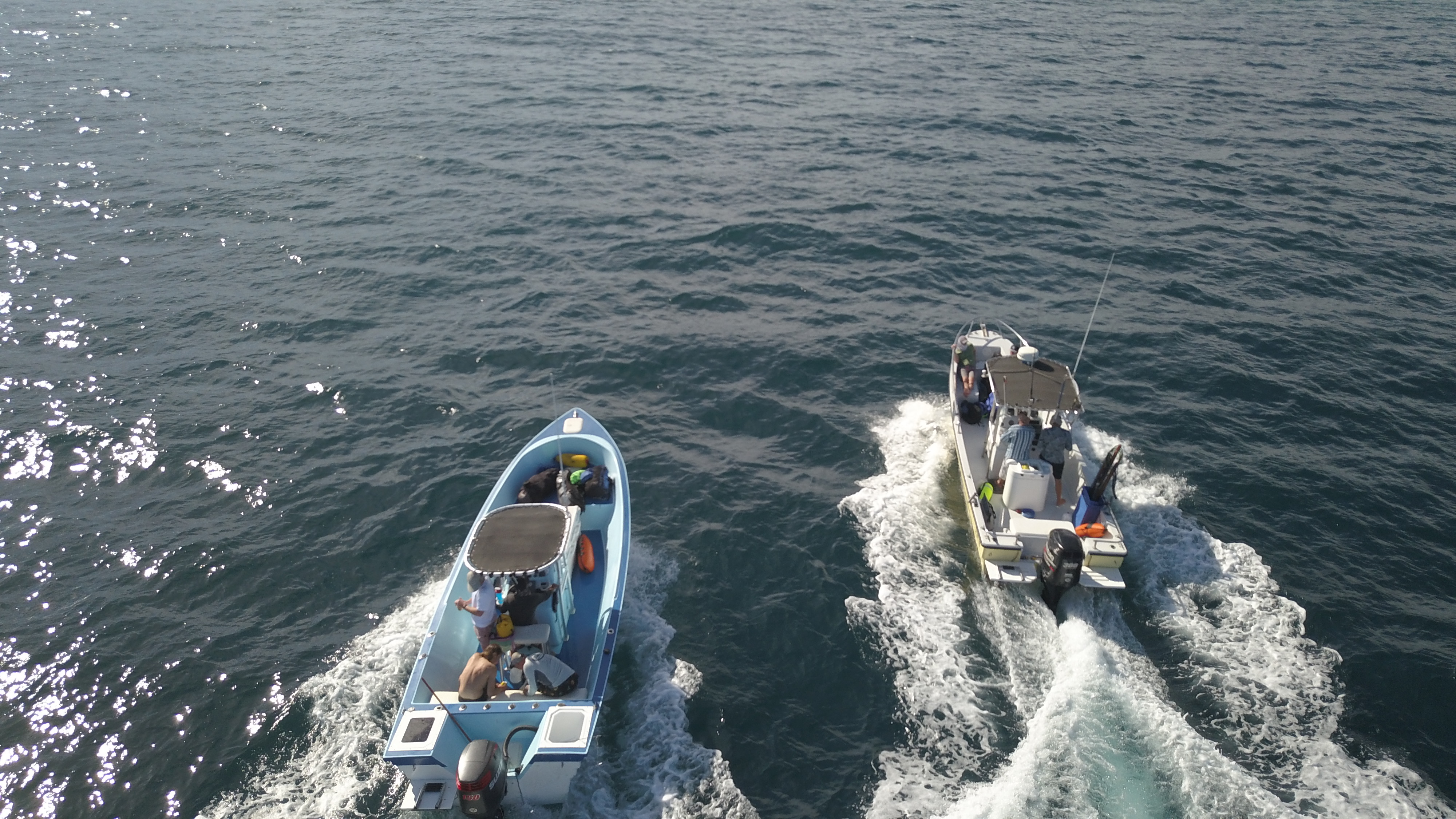
The spread is the arrangement of lines behind the boat. It is the single most important idea in trolling. Each line sits at a different distance and a different position, so the whole thing looks like a small scattered school rather than a few objects in a row.
The lines closest to the boat are the flat lines, run straight off the rod tips a short distance back, working in the white water of the prop wash. Outrigger lines are clipped to poles that swing out from the sides of the boat. That spreads the baits wider and drops the line angle so the lure tracks cleanly, and outrigger baits usually sit further back than the flat lines. The furthest bait, sometimes called the shotgun or the way back, runs a long way behind everything else, often off the centre of the boat.
Teasers matter too. A teaser is a hookless lure or a daisy chain of plastic squid pulled close to the transom. It makes commotion and pulls a curious fish up into the spread, where it then finds something with a hook in it. When a marlin comes up on a teaser, the crew will often wind the teaser away from the fish to wind it up, then feed a real bait into the hole it leaves.
The prop wash is not a problem to be avoided. It is a feature. The bubble trail and the boat noise imitate a bait ball being pushed around, and fish come in to look. That is why baits ride in and around the wash instead of well off to the side of it.
Speed is what makes a lure swim. Every skirted lure and every rigged bait has a range where it works correctly. Too slow and a lure goes limp and rolls over. Too fast and it blows out of the face of the wave, skips, and drags air.
For most marlin and tuna trolling with artificials that range is roughly six to nine knots. Rigged dead baits like mackerel or ballyhoo get pulled slower, often four to seven knots, because a bait that spins twists your leader into a corkscrew and will not get eaten. Slow trolling a live bait is slower again, sometimes barely above idle. Wahoo are the exception in the other direction and are often targeted at twelve knots or more with heavy lures that stay down.
You will also see the boat turn regularly rather than run dead straight. Turning changes the speed and depth of every lure in the spread. Baits on the inside of the turn slow and sink, baits on the outside speed up and rise. That change often triggers a bite.
Watch the lures, not the horizon. A lure that is working right leaves a smoke trail of bubbles, pops up to breathe, then digs back in with a regular rhythm. A lure that has picked up a scrap of weed or a plastic bag stops doing that. Spotting a fouled lure and saying so is genuinely useful.
You are also watching for shapes. A striped marlin lighting up behind a bait shows as a bar of electric blue and purple. Tuna often show as a boil or a hard swirl with no fish visible. Dorado crash a bait right on the surface. Calling out what you see, even if you are not certain, is better than staying quiet.
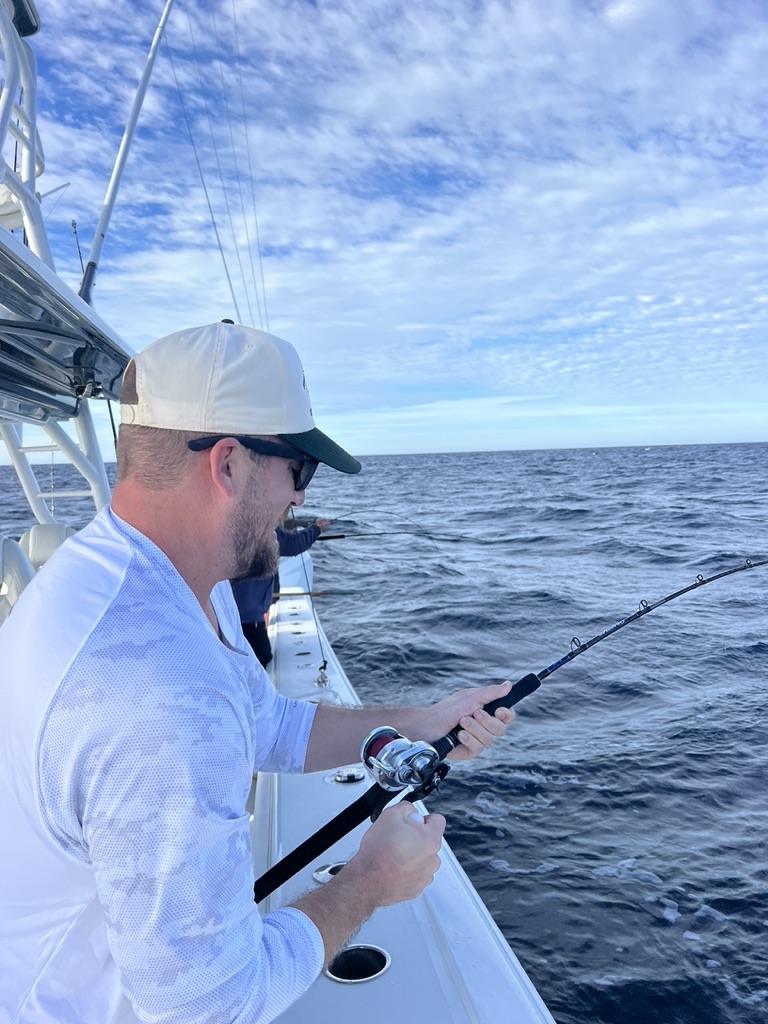
When an outrigger line goes off, the line pops out of the release clip and the rod loads up as the slack comes tight. That pop is loud and it is the standard signal that something is on.
What you do next depends on the hook. With a J hook in a lure, the fish usually hooks itself against the drag and the boat, and your job is to get to the rod and start winding. With a circle hook in a bait you do the opposite of what instinct says. You do not swing. You let the fish take the bait and turn away, then push the drag up and wind steadily until the line comes tight, which pulls the hook into the corner of the jaw. Striking hard with a circle hook pulls it straight back out of the fish.
The crew will be clearing the other lines while this happens so the hooked fish does not cross them. Stay out of the way of that until you are told where to stand.
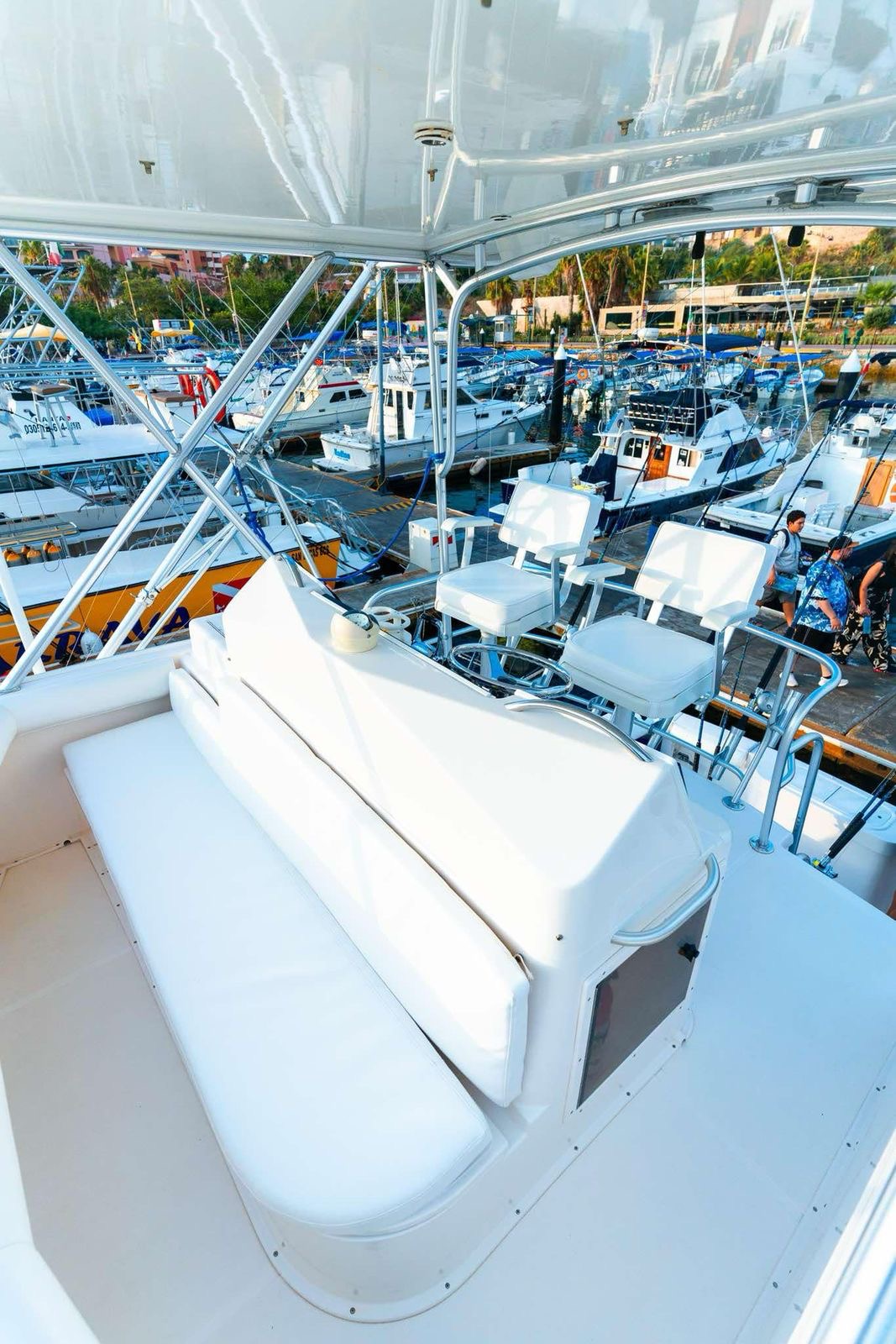
Sit where you can see the spread. Keep the deck clear of bags, bottles and loose cameras. When a fish is on, move deliberately and never step over a taut line. Listen to the deckhand about drag settings, because the drag was set with a scale before you left the dock and guessing at it mid fight breaks line and loses fish.
You do not need to have done this before. Beginners are welcome, and if you would rather not travel with your own gear, rod and reel rental is available.
Trip lengths, target areas and what tends to be running in a given month all depend on conditions and on what you book. To confirm.
The short version of how a trip with Indigo Adventures works. Licences, deposits, boats and what happens to your catch. The full FAQ has the rest.
Read the full FAQ→Indigo Adventures is based in El Pescadero, on the Pacific side of Baja California Sur, a few minutes south of Todos Santos. Boats launch from three points: Punta Lobos beach in Todos Santos, San Jose del Cabo, and the Cabo San Lucas Marina. Which boat runs your trip decides where you meet us.
Custom fishing and spearfishing charters, freediving excursions, whale watching from mid December to April, and kayaking. Every trip is built around your group, your dates and the conditions rather than a fixed timetable, and almost every one goes out private.
Book online on the Book Now page, where availability is live and a 50 percent deposit holds the date. If you would rather we picked the trip, send an enquiry with who is coming, when you are here and what you want out of the day, and we will say which trip fits and which one does not.
No. Everyone fishing in Mexican waters needs a Mexican sportfishing licence, and each angler buys their own. We help you arrange it before the day so nobody is sorting paperwork on the dock. The same licence covers rod and spear.
Rarely. Almost every trip goes out as a private boat for you and your group. If a split makes sense for a small party we will say so when you enquire.
Three on the 24 foot Punta Lobos panga, up to four on La Ruca and La Morita, and up to six on Don Pancho and El Wahoo King. Whale watching numbers run a little higher because nobody is swinging a rod.
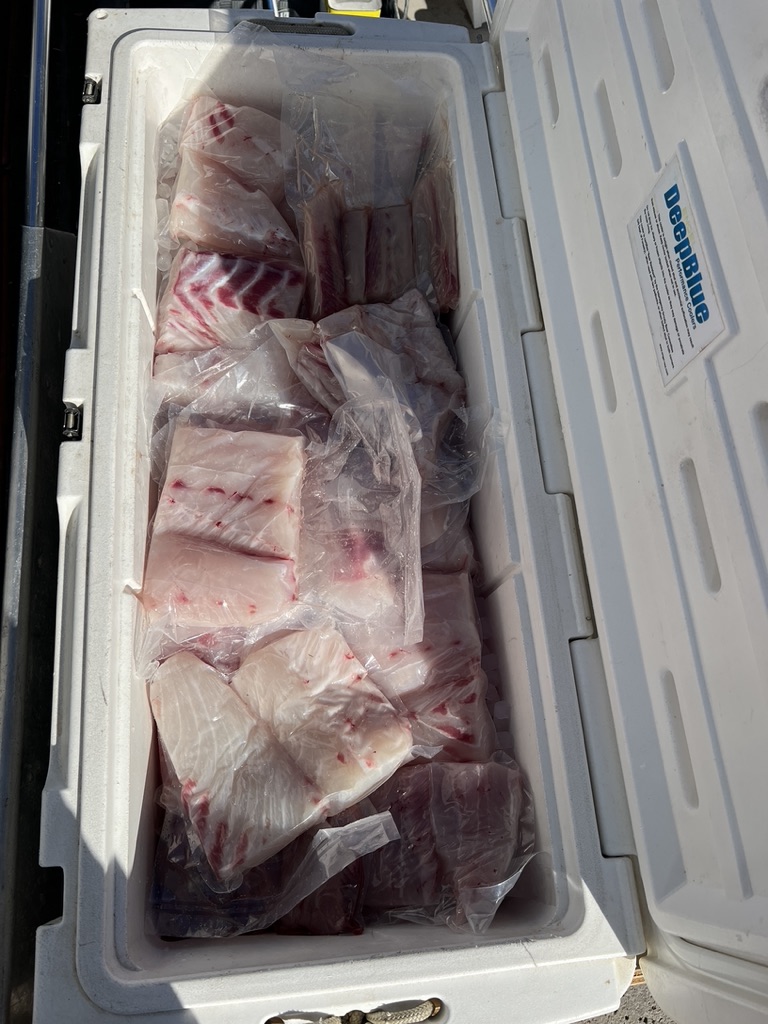
Yes. The catch goes home with you. Filleting at the dock, vacuum sealing and freezing are available, and most guests fly home with a cooler. Marlin are mostly released, with judgement on the day.
Yes, on fishing days. The crew rigs and handles the gear and hands you the rod when something eats. Guided spearfishing needs breath-hold experience and runs on a strict buddy system, which is the only legal way to spearfish in Mexico. Water, ice and snacks are normally aboard.