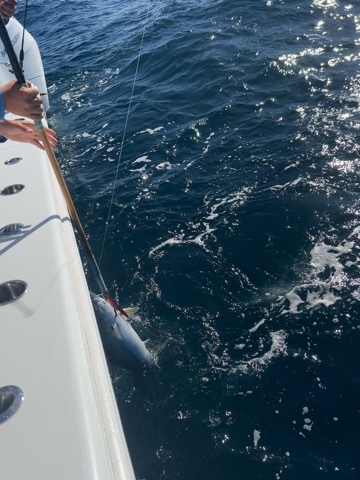
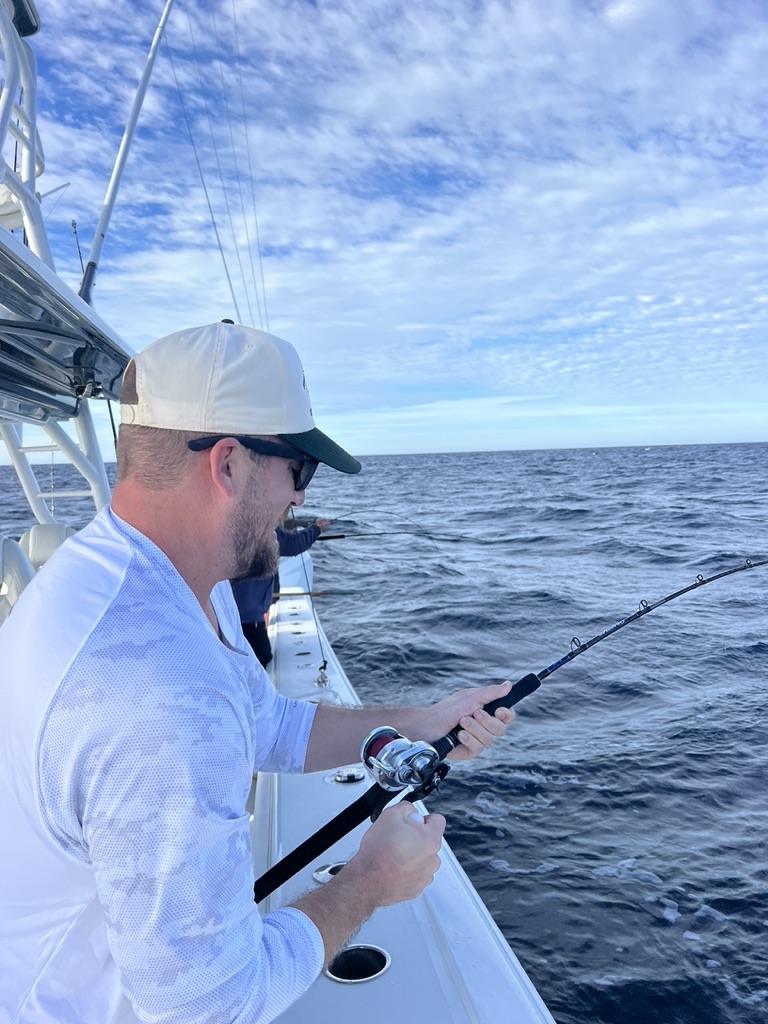
Kite fishing hangs a live bait from a kite flown off the boat, so the bait splashes on the surface with no line and no leader in the water near it. It produces the most visual bite in fishing. It is also the fussiest thing done on a charter, because it depends entirely on the wind doing what you need it to do.
A fishing kite is flown off its own rod and reel. The kite line runs out to windward, and the fishing lines are attached to it with release clips set at intervals. When a clip goes out with the kite it carries your fishing line along with it, so your line runs from the rod tip up to the kite and then straight down to the water.
That vertical drop is the whole point. Only the bait and a few inches of leader touch the water. The kite holds the bait right at the surface where it cannot swim down, so it stays there kicking and splashing instead of sounding.
A bait pinned at the surface is a bait in trouble, and it broadcasts that constantly. Predators below see a silhouette against the sky, a shadow, and a lot of surface noise coming from something that cannot get away. There is no boat noise beside it, no trolling wake, and no line or leader lying visible in the water. For line shy fish in clean water that removes almost every reason to refuse.
You are also fishing baits well away from the boat and well apart from each other, so a spooky fish can come up on one bait without ever seeing the hull.
The parts, working outward from the boat:
A kite needs steady wind to hold its position. Too little and it sags into the water and your baits sink. Too much and it becomes hard to control, the baits get skipped clear of the surface, and lines tangle. Gusty, swinging wind is worse than either extreme, because the kite surges and the baits get yanked in and out.
Crews manage this by changing kite size, by adjusting boat heading and speed to add or subtract apparent wind, and by adding a helium balloon in very light air. When the wind is genuinely wrong, kite fishing is off the table that day. A crew who tells you that is being straight with you.
Baits are bridled rather than hooked through flesh, because a kite bait works hard and has to stay lively. Set it so the bait is just touching the water, with the line tight enough that it splashes and loose enough that it can swim. Then watch the float and watch the bait.
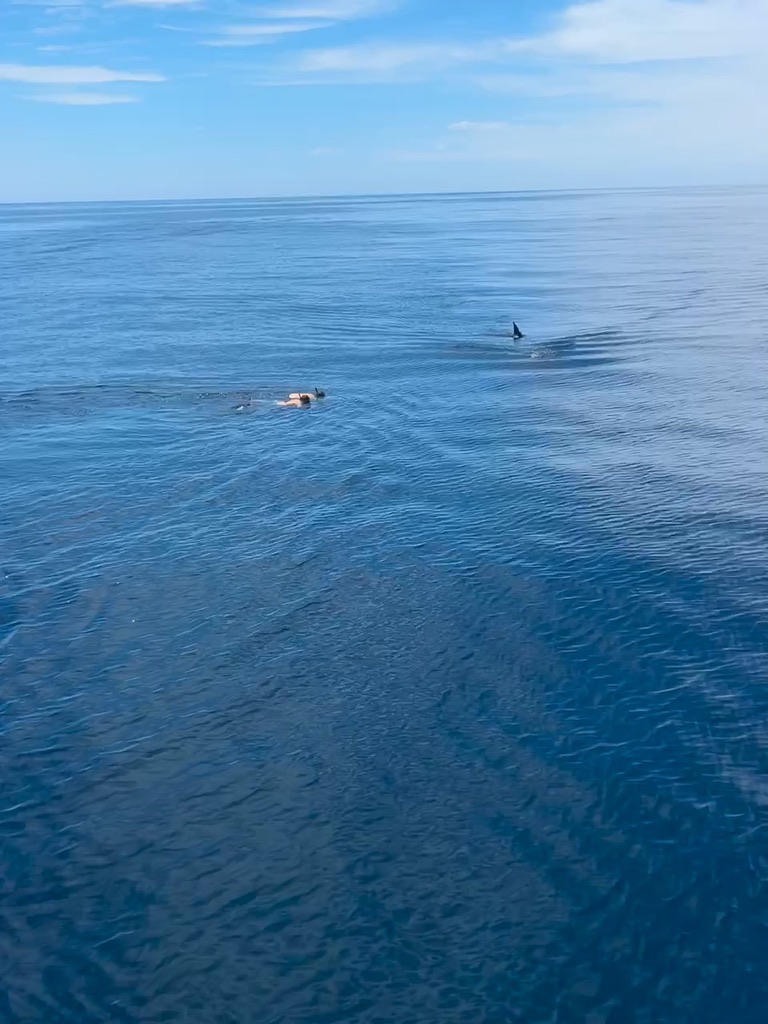
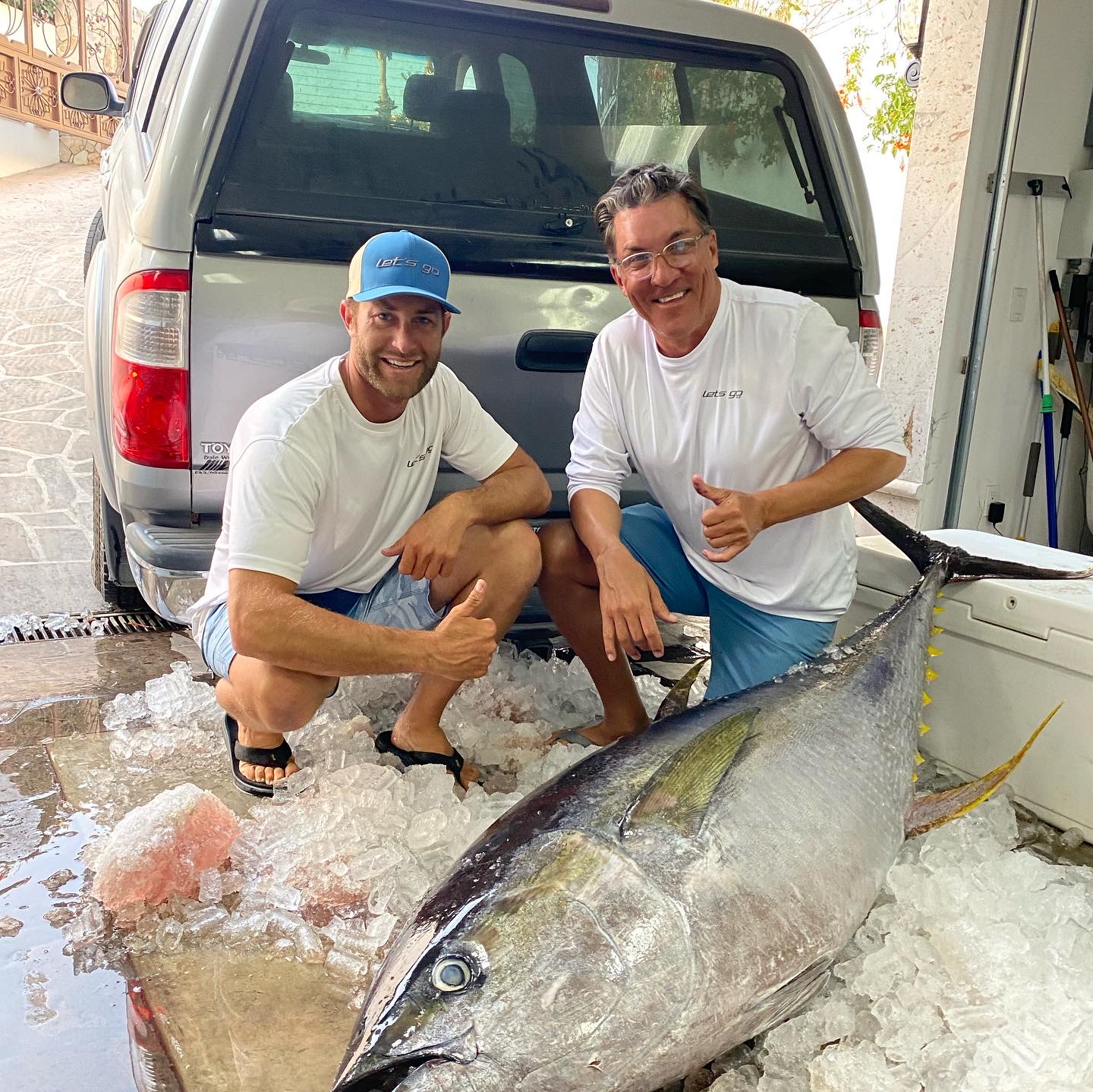
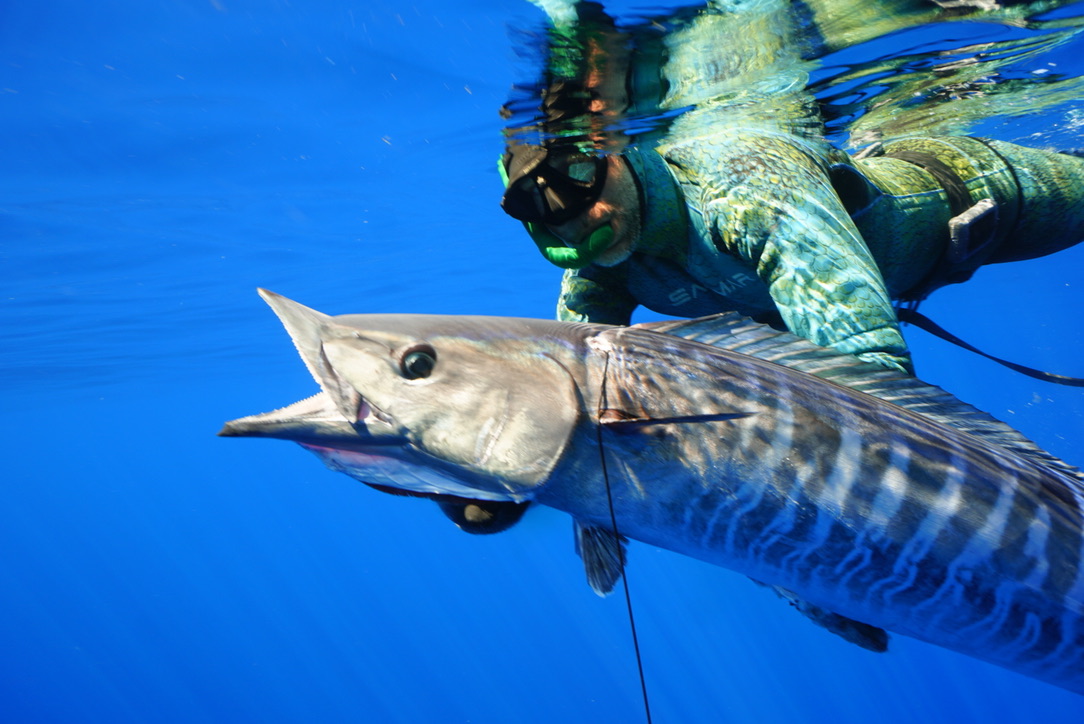
The bite is visual and it usually announces itself. The bait gets nervous first, skipping and jumping harder than it was. Then you see the fish: a marlin's bill and dorsal, a tuna's boil, a wahoo appearing out of nothing. The bait disappears into a hole in the water.
When the fish eats, the line pulls free of the release clip and drops. Now there is a large belly of slack between you and the fish. That slack is a feature, not a mistake. It gives the fish time to turn away with the bait, which is exactly what a circle hook needs.
Wind fast to catch up to the slack, keep winding, and let the hook find the corner of the jaw as the line comes tight. Do not stop to strike. Do not lift the rod. The most common way to lose a kite fish is to wind twice, feel weight, and yank.
Kite fishing has more moving parts than anything else done off the back of a boat. Multiple lines in the air, a kite that has to be actively flown, baits to keep alive, and a hookup that needs several people to do the right thing inside about ten seconds. It rewards a crew who have done a lot of it and a group willing to take direction quickly and without discussion.
When conditions make kite fishing worth trying, what kite gear is carried, and how it fits into a normal day on the water: to confirm.
The short version of how a trip with Indigo Adventures works. Licences, deposits, boats and what happens to your catch. The full FAQ has the rest.
Read the full FAQ→Indigo Adventures is based in El Pescadero, on the Pacific side of Baja California Sur, a few minutes south of Todos Santos. Boats launch from three points: Punta Lobos beach in Todos Santos, San Jose del Cabo, and the Cabo San Lucas Marina. Which boat runs your trip decides where you meet us.
Custom fishing and spearfishing charters, freediving excursions, whale watching from mid December to April, and kayaking. Every trip is built around your group, your dates and the conditions rather than a fixed timetable, and almost every one goes out private.
Book online on the Book Now page, where availability is live and a 50 percent deposit holds the date. If you would rather we picked the trip, send an enquiry with who is coming, when you are here and what you want out of the day, and we will say which trip fits and which one does not.
No. Everyone fishing in Mexican waters needs a Mexican sportfishing licence, and each angler buys their own. We help you arrange it before the day so nobody is sorting paperwork on the dock. The same licence covers rod and spear.
Rarely. Almost every trip goes out as a private boat for you and your group. If a split makes sense for a small party we will say so when you enquire.
Three on the 24 foot Punta Lobos panga, up to four on La Ruca and La Morita, and up to six on Don Pancho and El Wahoo King. Whale watching numbers run a little higher because nobody is swinging a rod.
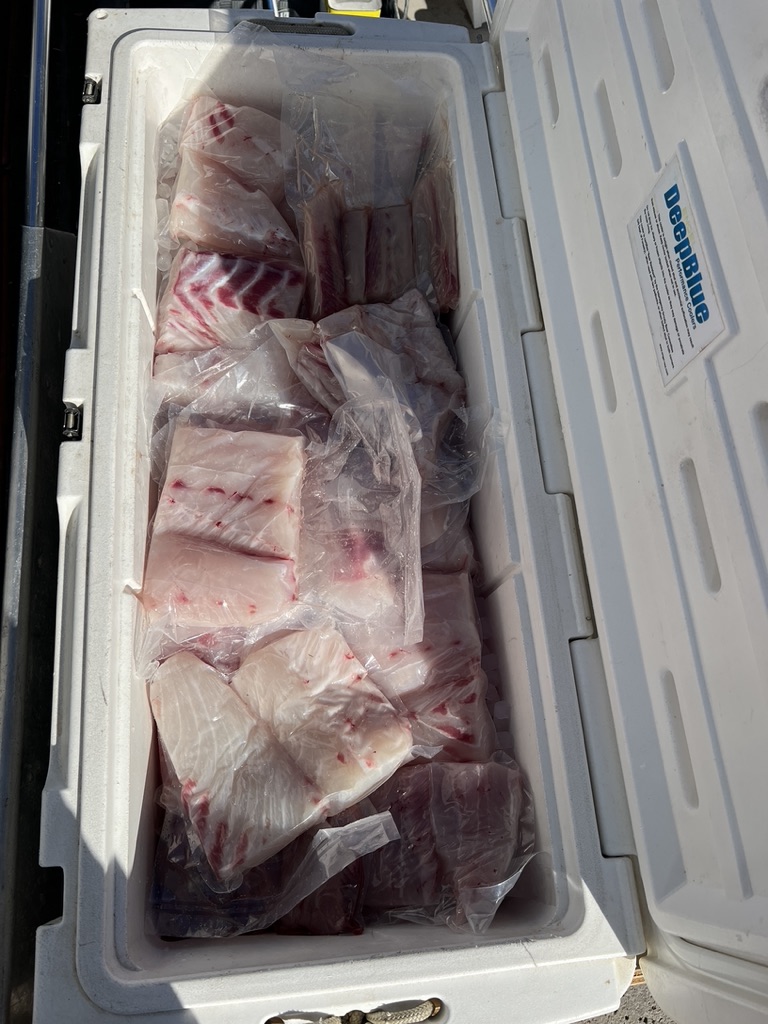
Yes. The catch goes home with you. Filleting at the dock, vacuum sealing and freezing are available, and most guests fly home with a cooler. Marlin are mostly released, with judgement on the day.
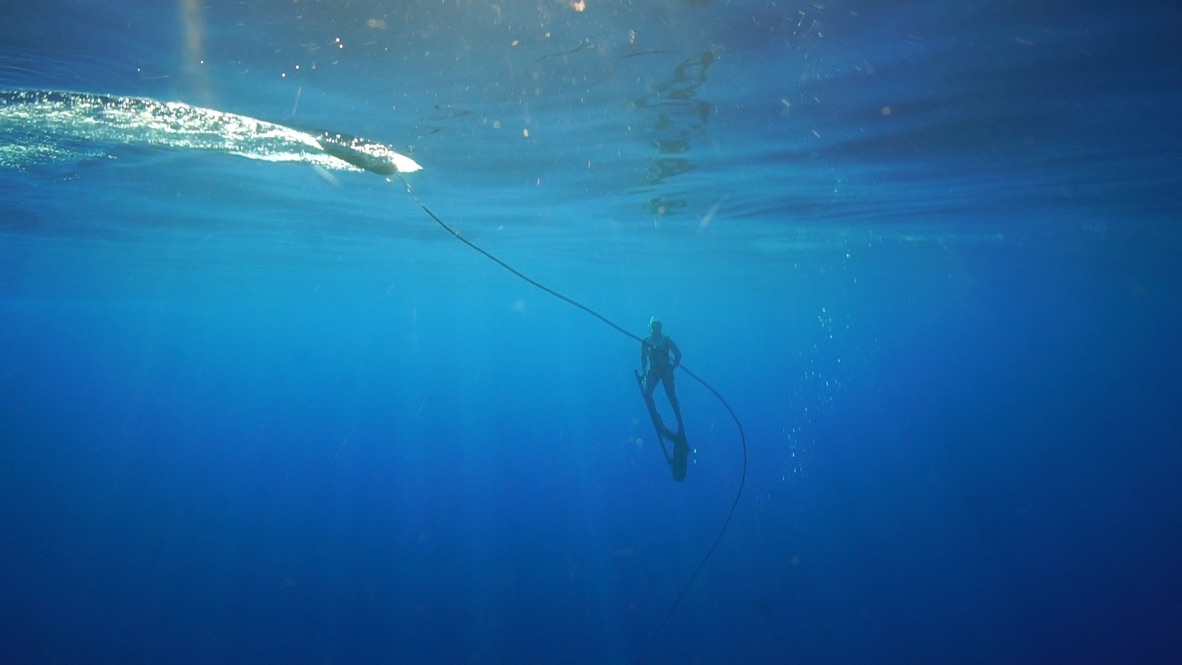
Yes, on fishing days. The crew rigs and handles the gear and hands you the rod when something eats. Guided spearfishing needs breath-hold experience and runs on a strict buddy system, which is the only legal way to spearfish in Mexico. Water, ice and snacks are normally aboard.