Freediving is going down on one breath. It is quiet, efficient and the most direct way to be in the water with fish. It is also unforgiving of casual mistakes, and the mistakes that matter are not the ones most people expect. This page covers the safety practice that actually keeps people alive and what training generally involves.
This is the thing that kills freedivers. It is the reason every rule further down this page exists, so read it properly.
Shallow water blackout is a loss of consciousness caused by low oxygen. It usually happens in the last part of the ascent or in the first seconds at the surface, because as you rise the pressure around you drops, the oxygen pressure in your lungs drops with it, and the brain can lose its supply very fast at exactly the moment you think you are safe.
It gives no warning. There is no dizziness, no panic, no signal telling you to abort. A diver who blacks out looks normal one second and is unconscious the next. Alone, they sink and they drown. With a trained buddy present, it is usually a complete non event, because an unconscious diver brought to the surface with the airway kept clear typically starts breathing again within seconds.
That difference, alone against not alone, is the entire safety system.
Not once. Not on an easy dive. Not in ten feet of water. Not while everyone else is on the boat and you only want a quick look at something. The freedivers who die are usually experienced and usually alone.
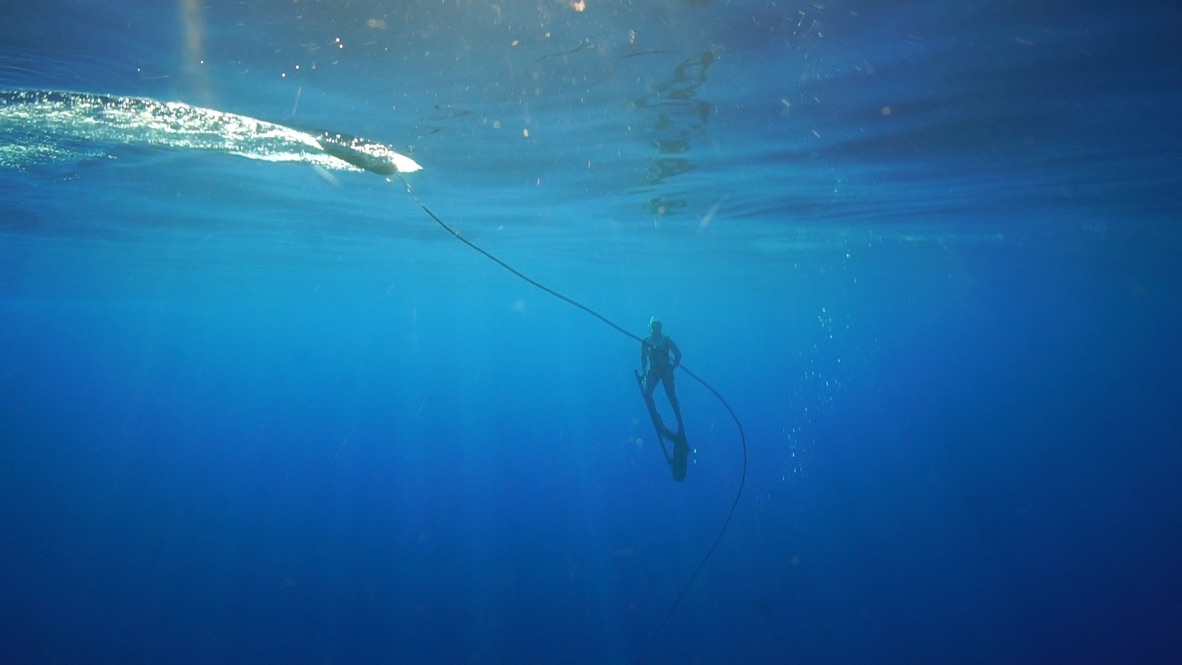
The standard is one up, one down. One diver in the water on a dive, one trained buddy on the surface watching that diver, every single dive, both ways, taking turns. The buddy is not swimming nearby doing their own thing. They are watching. They meet the diver on the way up, ideally around ten metres, stay with them all the way to the surface, and keep watching their face for at least thirty seconds after they surface, because a blackout can happen after a diver has already taken a breath and said they feel fine.
If you cannot make one up one down work, you are not diving. Sit the dive out.
Hyperventilating means breathing hard and fast before a dive to feel like you have loaded up on air. It does not work and it kills people.
The urge to breathe comes from rising carbon dioxide, not from falling oxygen. Hyperventilating blows off carbon dioxide without meaningfully increasing the oxygen you carry. All you have done is switch off the alarm while leaving the danger exactly where it was. You get a longer, more comfortable dive and no warning at all before you black out. This is how strong swimmers die in swimming pools.
Breathe normally. If anything, breathe slower and quieter than usual.
A proper breathe up is two or three minutes of calm, relaxed breathing while floating still, letting your heart rate settle. The final breath before you go down is a full but unforced inhale. No packing air in, no straining.
After the dive, use recovery breathing. Hold the buoy, keep your airway well clear of the water, take several short sharp inhales with a brief hold before each exhale, then rest. General guidance is a surface interval of at least twice the length of your dive, and considerably longer as dives get deeper. Diving again while still short of oxygen is how people stack up trouble across a session without noticing.
Some other things that are not negotiable. Do not freedive after scuba diving. Respect surface intervals before flying. Do not freedive dehydrated, hungover or on a bad night of sleep. Do not chase someone else's depth.
Descent starts with a duck dive: fold at the waist, lift the legs straight up out of the water so their weight drives you under, then a few finstrokes until you are negatively buoyant and can stop working and sink.
Equalise early and often, before you feel pressure, and always on the way down rather than trying to catch up after it hurts. Most people start with a Valsalva, pinching the nose and gently pushing air into the ears. Past roughly the first ten or fifteen metres the Frenzel technique becomes necessary, because there is no longer enough lung volume to push with. Learning Frenzel properly is one of the main reasons people take a course.
If an ear will not clear, stop and come up. Nothing down there is worth a perforated eardrum, and forcing an equalisation can also set up a reverse block on the way back.
Recognised freediving agencies exist worldwide, among them AIDA, PADI, SSI, RAID and Molchanovs. Their entry level courses generally cover the same ground: breath hold physiology, relaxation and breathing technique, equalisation, duck dives and finning, weighting and buoyancy, and rescue skills including recognising and handling a blackout and a loss of motor control. Most combine classroom or online theory, confined or shallow water sessions, and open water dives to a stated depth.
Naming those agencies here is background about the sport. It is not a claim. Indigo Adventures is not stating any affiliation with, or approval from, any of them on this page. What training, certification, supervision or freediving trips Indigo Adventures actually offers, and what prior certification or experience is required to join: to confirm.
Most people who dive with us bring their own kit, because a mask and a wetsuit that fit you are worth travelling with. Some rental gear is available, so ask when you book what is on hand rather than assuming either way.
One thing worth knowing before you pack. We provide lead and floats, so you do not have to fly with weights. That is dead weight in a bag, it eats your baggage allowance, and there is no reason to carry it here.
A freediver's kit should be simple and checked before you get wet. Long blade fins or a monofin, a low volume mask, a wetsuit suited to the water temperature, a weight belt with a quick release you can find without looking, and a surface buoy with a dive flag and a line. The buoy is safety equipment, not an accessory. It marks you to boat traffic, gives your buddy something to hold, and gives you something to grab if you surface tired.
Weight yourself so you are positively buoyant at the surface with empty lungs. Overweighting is common and it is the worst mistake to make, because it makes the last part of the ascent, the exact part where blackouts happen, the hardest part of the dive.
Before anyone gets in, agree the plan out loud. Who dives, who watches, how deep, how long, and what the signals are. Then hold each other to it.
The short version of how a trip with Indigo Adventures works. Licences, deposits, boats and what happens to your catch. The full FAQ has the rest.
Read the full FAQ→Indigo Adventures is based in El Pescadero, on the Pacific side of Baja California Sur, a few minutes south of Todos Santos. Boats launch from three points: Punta Lobos beach in Todos Santos, San Jose del Cabo, and the Cabo San Lucas Marina. Which boat runs your trip decides where you meet us.
Custom fishing and spearfishing charters, freediving excursions, whale watching from mid December to April, and kayaking. Every trip is built around your group, your dates and the conditions rather than a fixed timetable, and almost every one goes out private.
Book online on the Book Now page, where availability is live and a 50 percent deposit holds the date. If you would rather we picked the trip, send an enquiry with who is coming, when you are here and what you want out of the day, and we will say which trip fits and which one does not.
No. Everyone fishing in Mexican waters needs a Mexican sportfishing licence, and each angler buys their own. We help you arrange it before the day so nobody is sorting paperwork on the dock. The same licence covers rod and spear.
Rarely. Almost every trip goes out as a private boat for you and your group. If a split makes sense for a small party we will say so when you enquire.
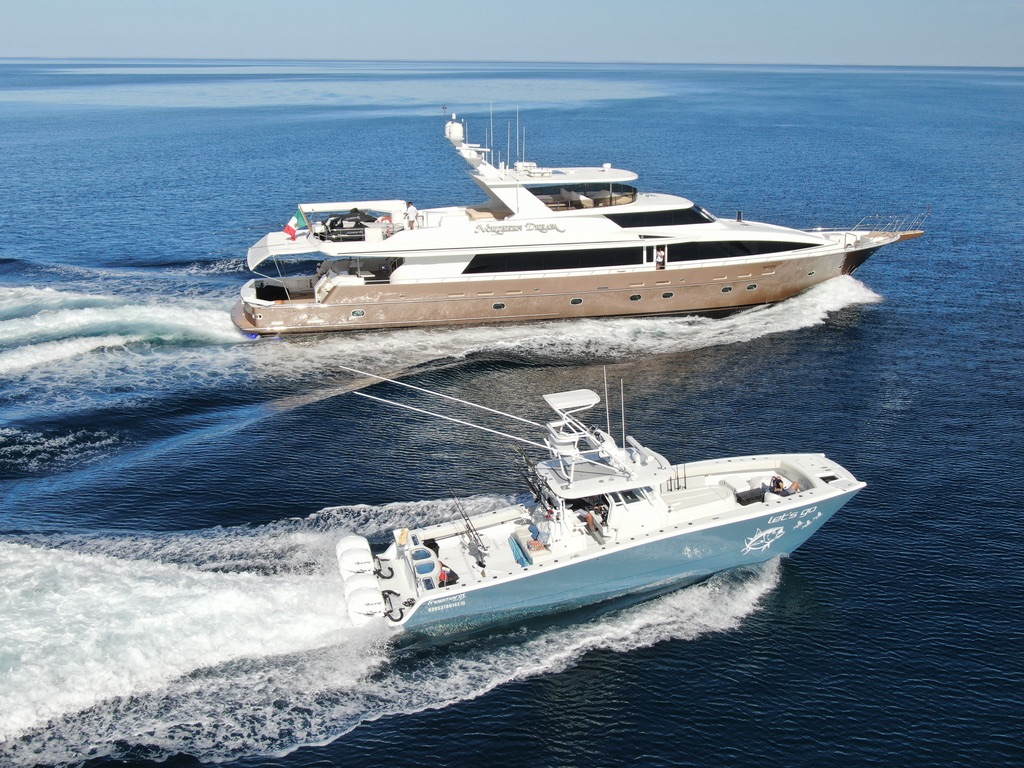
Three on the 24 foot Punta Lobos panga, up to four on La Ruca and La Morita, and up to six on Don Pancho and El Wahoo King. Whale watching numbers run a little higher because nobody is swinging a rod.
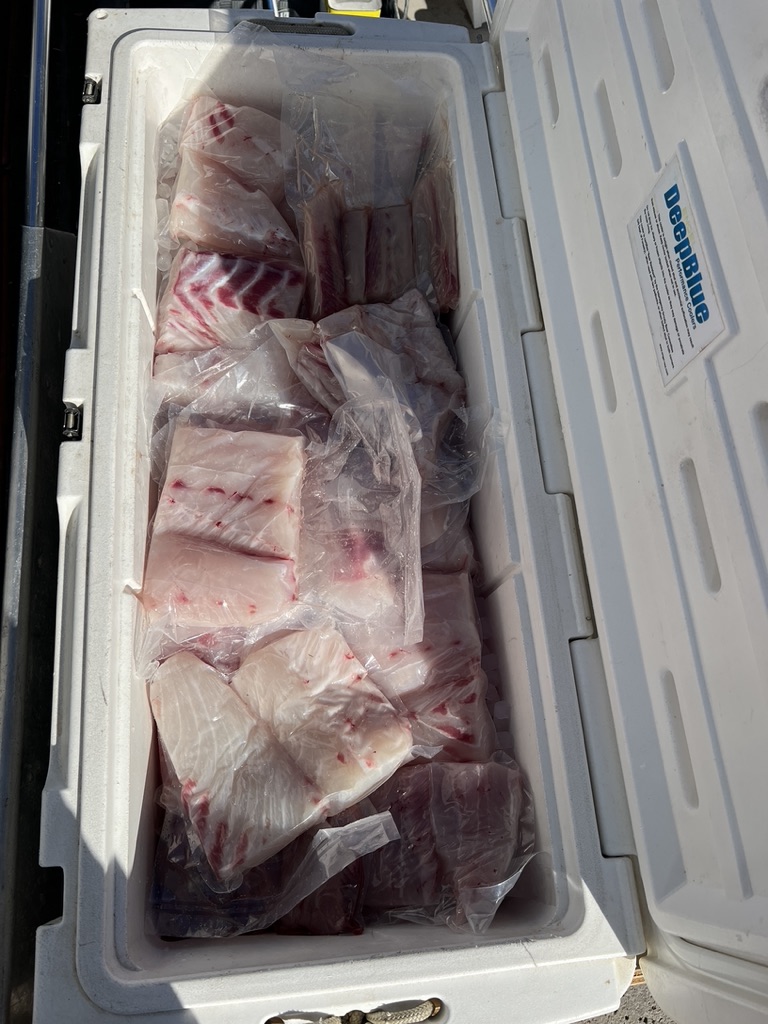
Yes. The catch goes home with you. Filleting at the dock, vacuum sealing and freezing are available, and most guests fly home with a cooler. Marlin are mostly released, with judgement on the day.
Yes, on fishing days. The crew rigs and handles the gear and hands you the rod when something eats. Guided spearfishing needs breath-hold experience and runs on a strict buddy system, which is the only legal way to spearfish in Mexico. Water, ice and snacks are normally aboard.